UK ruling on Chinese law could shape Bitcoin fraud victims’ claims to gains
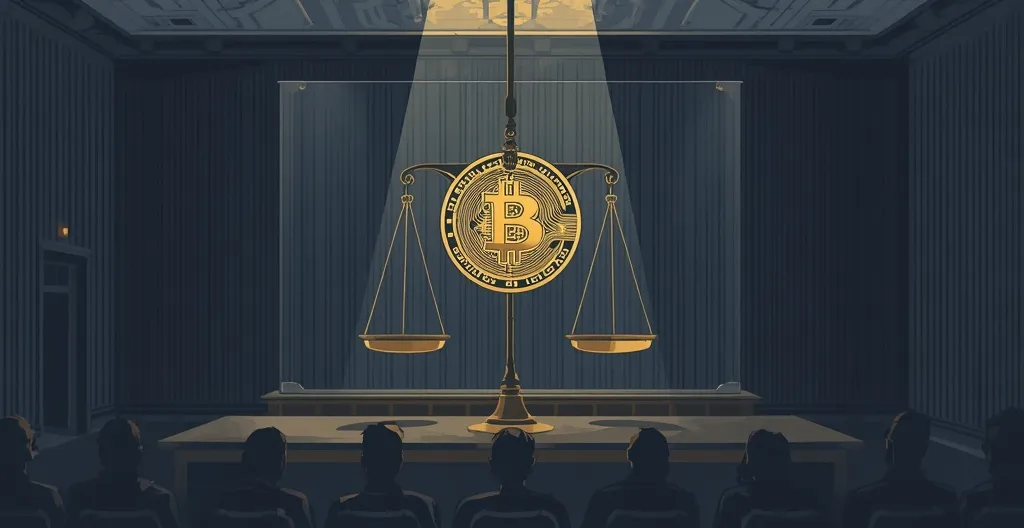
A UK High Court ruling has selected Chinese law to govern investors’ claimed ownership rights in more than 61, 000 Bitcoin linked to a Chinese investment fraud. The decision could affect whether claimants benefit from the coins’ appreciation, but it does not decide who owns the Bitcoin or what anyone will receive.
- About 16, 000 claimants are involved in the UK recovery process, Caixin reports.
- Chinese law will govern their asserted ownership rights, but individual claims remain unresolved.
- Caixin says recovery could be limited to principal and interest. That is not a final court determination.
Ruling selects applicable law, payment remains unresolved
Mr Justice Turner ruled that Chinese law governs investors’ asserted ownership rights in Bitcoin tied to an illegal fundraising operation run through Tianjin Lantian Gerui Electronic Technology, also known as Tianjin Blue Sky Ge Rui. The judgment is dated Oct. 12, though reports available do not identify the year.
According to Duan & Duan UK LLP’s account of the proceedings, the ruling answered a choice-of-law question: which country’s law should be used to assess whether investors have an ownership interest in the assets. It did not determine the substance or effect of Chinese law, decide the merits of individual applications, or set any payments.
The court rejected the applicants’ alternative arguments for applying English law to determine their ownership rights. Duan & Duan says English law will still provide the procedural framework for hearing the claims. The precise consequences of applying Chinese law, and how it applies to each applicant, remain for later proceedings.
Caixin reported that investors could be limited to recovering their original investments and interest rather than sharing in the Bitcoin’s subsequent appreciation. That is a possible consequence reported by the outlet, not a court order or a final ruling on any claimant’s recovery.
Why a repayment claim may not be enough
The Director of Public Prosecutions brought civil recovery proceedings under Part 5 of the Proceeds of Crime Act 2002. Civil recovery is a process for asking a court to recover property believed to be connected to crime. It is separate from deciding whether particular investors have a legal right to that property.
Investors applied under Section 281 for declarations that property subject to recovery belongs to them. As Duan & Duan explains, applicants must establish an ownership interest in the property. Showing that a fraudster owes them money is not enough on its own.
The applicants argued, among other things, that investment contracts induced by fraud should be cancelled and that their money could be traced into the Bitcoin. Tracing means following assets from their original form into other property. If successful, an ownership claim could attach to specific recovered assets. A personal repayment claim is a demand that the fraudster pay a debt.
The investors’ arguments now have to be assessed under Chinese law. The next stages will matter: the court must establish what the relevant Chinese legal rules mean and whether each applicant can prove the ownership interest required to claim the Bitcoin.
The scale of the potential recovery
The case concerns Bitcoin connected to an illegal fundraising operation that reportedly affected more than 128, 000 people in China between 2014 and 2017. Caixin reports that about 16, 000 investors have joined the UK recovery process. The figures refer to the wider reported fraud and the UK claimants, respectively. They do not mean every affected person is a party to the proceedings.
A November 2025 report by crypto.news valued the seized Bitcoin at more than $6 billion at that time. This figure values the assets. It does not represent the amount available to victims or predict what any claimant will receive. Any eventual distribution depends on the ownership claims and the court’s decisions.
Qian Zhimin, also known as Yadi Zhang, was sentenced to 11 years and eight months at Southwark Crown Court on Nov. 11, 2025, after pleading guilty to two money laundering charges in September 2025, according to the same report. Jian Wen, described as helping Qian launder proceeds, was sentenced to six years and eight months in 2024, according to coverage citing the Crown Prosecution Service.
Jackson Ng, a partner at Duan & Duan, said: “We are considering the judgment carefully with our clients and will continue to pursue their claims.”
Seizure does not guarantee compensation
Bitcoin can be seized or frozen while legal proceedings continue, but neither step establishes who owns it or guarantees victims will be paid. Forfeiture is a separate legal outcome. Compensation requires its own legal basis and process.
A separate U.S. case shows one possible route, though it does not set a general rule. The U.S. Attorney’s Office for the District of Maine said more than $800, 000 belonging to two victims was transferred to criminal actors in 2022. The FBI traced and seized 470, 773 USDT, and a federal court ordered the proceeds forfeited after prosecutors filed a civil forfeiture complaint. The Department of Justice then announced that it would return about $470, 735 to the victims.
The U.S. announcement does not make victim payments automatic or determine how the UK claims will be handled. The proceedings involve different legal systems and different facts.
Key questions and answers
-
Which law governs the investors’ claimed ownership rights?
Chinese law, according to Mr Justice Turner’s ruling. The decision does not resolve the individual claims.
-
Could investors miss out on Bitcoin’s appreciation?
Possibly. Caixin reported that recovery could be limited to principal and interest, but the court has not made a final determination on payouts.
-
Is a claim for repayment enough to claim the Bitcoin?
No. Applicants must establish an ownership interest in the property. A personal claim that the fraudster owes them money is not sufficient on its own.
-
Does seizure guarantee that victims will be compensated?
No. Seizure preserves assets, but it does not decide ownership or guarantee payment.
The immediate questions are how Chinese law applies to the investment claims and which applicants can prove an ownership interest. Until those issues are resolved, the number of successful claimants and their share of the seized Bitcoin’s value remain unknown. Bitcoin’s value can also affect the size of the potential recovery.