
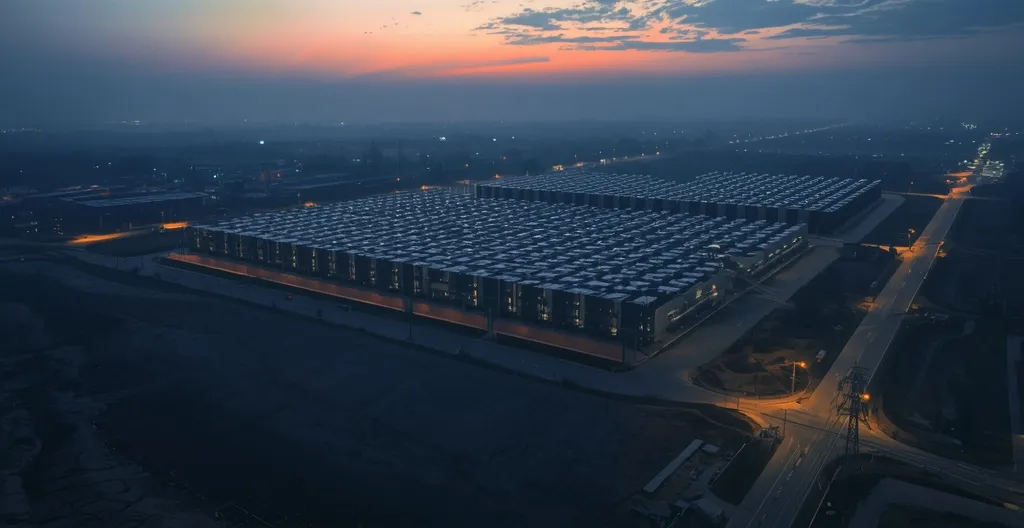
Thailand’s push to become a regional AI hub is running into a very basic problem: data centers need power, water, land, and public consent, not just glossy investment pitches.
- Buildout is already large: Mongabay and Eco-Business report around 40 operational data center projects, about 20 under construction, and around 10 more planned.
- The EEC is the pressure point: roughly two-thirds of new facilities are concentrated in the Eastern Economic Corridor near Bangkok.
- Critics are warning about strain: lawmakers and civil society groups say the boom could worsen water stress, pollution, and grid pressure.
- The BOI is tightening scrutiny: Thailand’s investment board says new proposals must clear tougher checks on energy, water, environmental protection, and local benefits.
Thailand has spent years trying to position itself as Southeast Asia’s digital heavyweight, and the country has attracted a flood of data center investment in the process. But the bigger the buildout gets, the harder it is to ignore the downside: heavy electricity demand, cooling needs, land use, and the question of who pays when infrastructure grows faster than the region can handle it.
That tension is especially sharp in the Eastern Economic Corridor, or EEC, Thailand’s special economic zone southeast of Bangkok. The corridor was built to draw in next-generation industry, but it now holds a growing share of the country’s data center load. That concentration is exactly what has lawmakers and environmental groups sounding the alarm.
The figures being cited come from reporting by Mongabay and Eco-Business, which say Mongabay identified more than 70 data centre projects in Thailand, with around 40 operational, around 20 under construction, and around 10 in planning. The distinction matters: these are data center projects broadly, not necessarily AI-only facilities. Still, the direction of travel is obvious. Thailand is building fast, and more of that buildout is meant to support AI workloads.
AI data centers are not ordinary office parks with a few servers in the back. They are large facilities built for heavy computing tasks such as model training and inference, which means constant electricity use and serious cooling requirements. In a region already dealing with resource limits, “we’ll figure it out later” is not a plan. It is procrastination with a ribbon on it.
Thai People’s Party member Sahassawat Kumkong is pushing for a rethink. He told Mongabay that Thailand needs to reassess its approach to data center development, and that the point should not simply be to attract investment as quickly as possible.
“I believe Thailand needs to rethink its overall approach to data center development, ” Kumkong said. “The objective should not simply be to attract investment as quickly as possible.”
“We also need to ensure that development is environmentally sustainable, the local communities are protected, and that the economic benefits are shared more fairly, ” he said.
That is the core political challenge here. Countries chasing foreign capital often rush to approve large projects before asking whether the infrastructure can actually support them. Then the sales pitch ends, and the public gets stuck with the real-world mess.
Kumkong said he plans to set up a committee to reassess existing policies on AI data centers, tighten environmental protections, and push for more disclosure around proposed projects and their impacts. That kind of transparency matters. Local communities cannot meaningfully weigh in on projects they barely get to see on paper.
Somnuck Jongmeewasin, research director at EEC Watch, was even more direct. He said the government should carry out a sustainability assessment for AI data centers in the EEC and check whether the area has enough resources for future operations.
“We have a lot of problems with water stress, including water-grabbing, and electricity blackouts [in the EEC], so there is no way that all new data centers that have been approved in the EEC area are going to be sustainable when they become fully operational, ” Somnuck said.
“Even if they buy their own water and power, these water and power supplies are from our shared supplies, from the same water reserves and power grids we rely on, ” he added.
That second point is the one corporate spin doctors hate most, because it blows up the fantasy of self-sufficiency. If a facility draws from the same reservoirs and the same grid as everyone else, the local impact still exists, even if the company has a private contract and wraps it in sustainability language.
The EEC’s vulnerability is not abstract. Concentrated industrial development piles pressure onto the same water and energy systems, which can turn one manageable project into a cumulative headache when dozens arrive at once. That is why project-by-project approvals can miss the bigger picture. A single data center might look fine on paper. A dense cluster can become something else entirely.
Thailand’s Board of Investment, or BOI, has responded by tightening screening for new data center proposals. According to The Nation, the tougher review will look at energy supply and readiness, water resource management, environmental protection and pollution controls, and whether a project brings real value to Thailand.
BOI Secretary-General Narit Therdsteerasukdi said the agency is acting on the national administration’s order to prioritize investments with greater long-term value for the country and its people.
“Investors must create concrete benefits for Thailand, whether by developing digital and AI personnel, helping Thai SMEs enter technology supply chains, establishing centres of excellence or sharing computing capacity to strengthen the country’s AI capabilities, ” Narit said.
That is the government’s counterweight to the boom: not stop building, but make sure the country gets more than a headline and a concrete slab. That is the right instinct. The question is whether the BOI will actually enforce it, or whether the screening process turns into a neat little rubber stamp with a sustainability checkbox slapped on top.
The broader backdrop explains why this fight matters so much. The EEC is not just any patch of land. It sits at the center of Thailand’s industrial strategy, which means pressure in the corridor does not stay in the corridor. It affects power planning, water allocation, land use, and the credibility of the entire “digital transformation” pitch.
There is also a deeper political cost if Thailand gets this wrong. Big tech investment can create jobs, supplier demand, and technical know-how. It can also concentrate benefits in corporate boardrooms while communities near the facilities absorb the environmental load. That imbalance is why so many countries end up selling the upside and socializing the downside. It is a tired trick, and people are getting less willing to swallow it.
Thailand still has room to build out digital infrastructure responsibly. But that requires more than investor-friendly slogans. It requires public disclosure, serious environmental review, honest accounting of local resource limits, and a willingness to say no when a project looks profitable but unsustainable.
If Thailand wants the AI label without the mess, it will have to prove that its approvals are based on hard limits, not hype. Otherwise the country will keep attracting the capital while quietly running up a bill that someone else will eventually have to pay.
- Why are AI data centers drawing pushback in Thailand?
Because they use a lot of electricity and cooling resources, and critics say the EEC already faces water stress, power pressure, and weak transparency around new projects. - Where are most of these projects being built?
Most are concentrated in the Eastern Economic Corridor, a special economic zone near Bangkok that has become the center of Thailand’s industrial and digital expansion. - What is the BOI changing?
Thailand’s Board of Investment is applying tighter screening to new data center proposals, focusing on energy readiness, water management, pollution controls, and whether projects provide real value to the country. - What benefits does Thailand want from investors?
Officials want concrete gains such as AI talent development, support for Thai SMEs in tech supply chains, centers of excellence, and shared computing capacity that strengthens domestic capabilities. - Can Thailand build more data centers responsibly?
Yes, but only if approvals are tied to honest resource planning, stronger environmental safeguards, and real accountability for local impacts instead of vague promises. - What is the biggest risk if the boom keeps accelerating?
The biggest risk is cumulative strain: even if individual projects look manageable, too many facilities in the same region can overload shared water and power systems and shift costs onto local communities.
Further reading
A few more angles worth keeping an eye on as Thailand pushes its AI and data center ambitions.
- Thailand’s AI data centers challenge sustainability goals
- Error Validating Session: 401 Unauthorized
- Residents fear data centres could add to existing water woes
- Thailand tightens data centre rules as AI demand grows
- Thai data center boom sparks fears of water shortage, air
- Data Centers Use Jet Engines for AI Boom as Grid Delays Hit
- AI Energy Crisis: Ex-Facebook Exec Warns of Grid Strain