
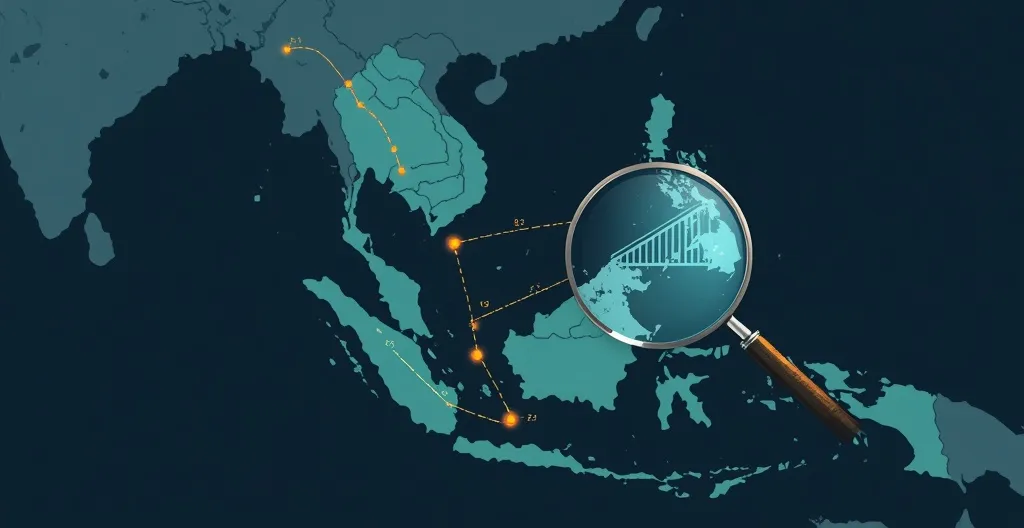
MetaComp says its StableX Agentic Network connects fiat and stablecoin payment routes across Southeast Asia, with more than 1, 000 members and over 100, 000 users. But the announcement is dated November 18, 2026, a future date. Its reported milestones and events cannot yet be treated as completed or independently verified.
- MetaComp says StableX connects conventional payment systems with stablecoin routes.
- The company says its Know Your Agent controls verify automated systems and limit their permissions.
- It provides no transaction volumes, fees, settlement times or independent performance assessments.
A network connecting different payment routes
MetaComp describes StableX as a cross-border payments network that connects fiat and stablecoin routes, then directs payments along available pathways based on rates. The company does not say which rates it compares, whether it prioritizes exchange rates, fees or another measure, or how the fiat and stablecoin parts of a transaction connect.
The announcement lists local-currency payouts in Singapore, Indonesia, Malaysia, Vietnam, the Philippines and Thailand. It lists local-currency collections in Singapore, the Philippines and Indonesia, with Vietnam to follow. It also names local payment rails and SWIFT as routes, but does not say which route applies in each market or explain the role of local financial institutions.
That distinction matters. SWIFT is a financial messaging network, not a settlement system. Naming SWIFT does not explain how funds move from sender to recipient, how long a payment takes or what it costs.
MetaComp has also named Solana as a preferred blockchain for settlement within the network. The announcement does not explain when a payment uses Solana, which stablecoins the network supports or how on-chain settlement connects to local-currency payouts.
Regional growth and regulatory complexity
MetaComp ties its expansion to Southeast Asia’s growing digital economy and cross-border trade. Google, Temasek and Bain & Company project that the region’s digital economy will reach US$368 billion in gross merchandise value in 2026, up 17%. Gross merchandise value, or GMV, measures the total value of goods and services sold. It is not the same as revenue or economic output.
The announcement also cites the ASEAN Secretariat’s figure of US$2.1 trillion in merchandise trade during the first half of 2025, up 16.4% year on year. The numbers point to a large regional market, but they do not show how much demand exists for StableX or how much trade the network could serve.
MetaComp also says ASEAN member states signed the ASEAN Digital Economy Framework Agreement (DEFA) on November 14, 2026, during the 49th ASEAN Summit. It calls DEFA the bloc’s first standalone, legally binding digital-economy agreement and says it is expected to enter into force in early 2027. The cited signing date is also in the future, so official ASEAN records are needed to confirm the signing, legal status and proposed timeline.
Even with common regional rules, cross-border payments come with practical challenges. Businesses must handle different currencies, domestic payment systems and regulatory requirements. A private network could connect some of those systems, but its value depends on the institutions involved, the permissions it holds in each market and the cost and reliability of its service.
How MetaComp says it will govern AI agents
StableX KYA, short for “Know Your Agent, ” is MetaComp’s framework for controlling payments initiated or carried out by AI agents. The company says the framework is designed to verify each agent, link it to a verified owner, restrict it to assigned permissions and make a responsible party traceable.
MetaComp says the KYA monitoring framework includes more than 30 measures across six governance objectives, with results displayed on a live dashboard. The announcement does not define the measures, explain how they are tested or report an independent audit. A dashboard can show controls, but it cannot prove they work.
The company says its VisionX system screens transactions in real time across fiat and on-chain activity. The announcement describes AEGIS as VisionX AI’s proprietary “Large Graph Model” for financial-crime detection and lists TraceX as a blockchain investigation platform. It provides no detection-performance figures or technical detail that would allow readers to assess either product’s effectiveness.
Agent controls address a real problem. Automated systems need clear limits, and someone must be accountable when they act. Customers also need evidence about how those controls perform, how the system handles transaction data and what happens when it flags legitimate activity or misses suspicious transactions. MetaComp provides no such details.
Reach is not the same as payment activity
MetaComp reports more than 1, 000 members and over 100, 000 users after the network’s first year. Those figures could indicate reach, but the company does not define who counts as a member or user. It also reports no payment volume or value. User numbers alone cannot show whether people make recurring payments or whether the network beats existing services on cost, speed or reliability.
The announcement lists a StableX network forum for November 17, 2026, on the eve of Singapore FinTech Festival, and names Senior Minister of State for Digital Development and Information Tan Kiat How as Guest of Honour. It also lists awards and company rankings dated 2026 and 2027. Those dates have not arrived, so the events and honors remain future claims, not completed milestones.
Key questions about MetaComp’s StableX network
-
How many members and users does StableX have?
MetaComp claims more than 1, 000 members and over 100, 000 users. The figures have not been independently verified, and the company has not explained how it defines either group.
-
Where does MetaComp say it supports local-currency payouts?
The company lists Singapore, Indonesia, Malaysia, Vietnam, the Philippines and Thailand. It does not specify the payment route in each country or explain how local institutions handle the final payout.
-
Where does it support local-currency collections?
MetaComp lists Singapore, the Philippines and Indonesia, with Vietnam to follow.
-
How does StableX KYA govern AI agents?
It is intended to verify agents, link them to verified owners, limit their permissions and keep their actions traceable to someone accountable.
-
Has the network’s effectiveness been independently demonstrated?
Not in the information provided. MetaComp reports reach and describes its products, but offers no transaction-performance data or independent assessment of its safeguards.
StableX aims to connect fragmented payment routes and make automated activity traceable to accountable owners. Both are worthwhile goals. But the future-dated announcement does not establish that the claimed milestones have happened, and the details provided are not enough to assess the network’s performance. Completed transaction data, costs, settlement details and independent testing will matter more than user totals or product labels.