
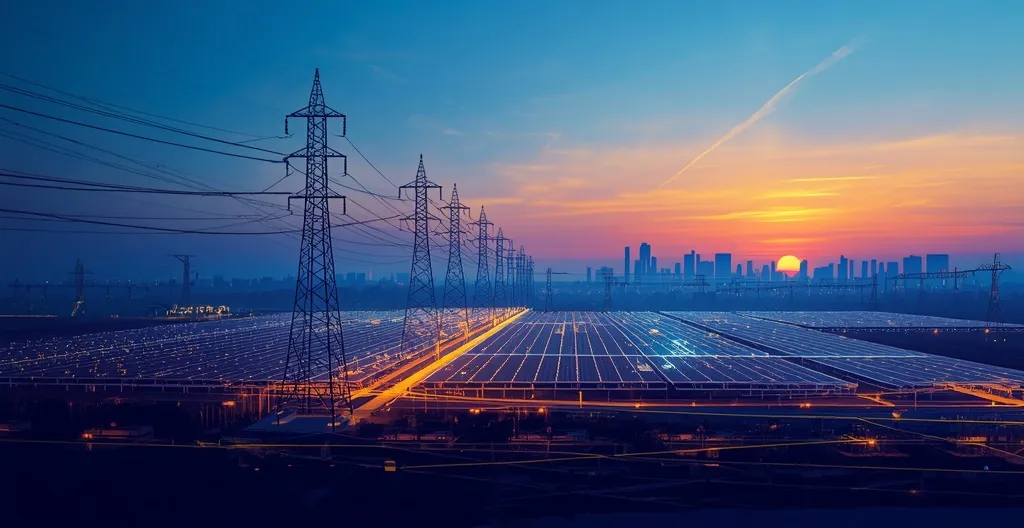
Maharashtra is exploring a policy to tokenize state-owned assets on blockchain, with electricity transmission infrastructure emerging as a possible first use case. The idea is to raise capital for new grid lines and energy storage without handing over public ownership outright.
- First target: transmission infrastructure
- Goal: fund grid expansion and storage
- Legal base: proposed DELTA Act
- Political line: not wholesale privatization
Praveen Pardeshi, CEO of the Maharashtra Institution for Transformation (MITRA) and chief economic advisor to the chief minister, laid out the proposal during The Box Launch in Mumbai on Friday, an invite-only event hosted by RealX and MST Blockchain at Mumbai’s World Trade Center. His pitch was straightforward: tokenize part of the state’s assets, sell those tokens, and use the cash to build infrastructure the state badly needs.
For readers new to the term, tokenization means turning a legal or economic claim tied to an asset into a digital token on a blockchain. That token can stand for a revenue share, a beneficial interest, or another financial right. The blockchain records the token. The law decides what it actually means. Without that legal backing, it is just a very expensive ledger with better branding.
Pardeshi was careful to frame the plan as financing, not a fire sale. He said tokenization should not be seen as “wholesale privatization.” That distinction matters. A government can keep legal control of an asset while still selling economic exposure to its cash flows. In practice, though, the line can blur quickly if token holders are promised income and some say in how the asset performs.
Transmission infrastructure is a sensible place to start because it brings in steady fees from moving electricity across the grid. According to Pardeshi’s remarks, Maharashtra could tokenize 40% to 50% of certain transmission assets, with token buyers receiving part of the income generated by Maharashtra Transco Company. The proceeds could then help fund new power lines and solar energy storage facilities.
That choice is not random. Maharashtra has surplus solar electricity at times, but not enough transmission capacity or storage to use that power efficiently. Solar output is cheap and abundant when it is available. The grid still has to move it and store it for when demand spikes. Otherwise, value leaks away through the cracks.
Pardeshi pointed to the economics behind the push. He said distribution companies can pay between 16 and 18 rupees per unit during peak demand, while surplus electricity can trade for as little as 2 paisa per unit at other times. That spread is the problem in one ugly little package: electricity is not just about generation, it is about timing, transport, and storage.
Energy storage is where the boring but vital part of the story lives. Batteries and similar systems let grids capture excess power and release it later, when prices and demand are higher. Without that, even a state with strong solar generation can still end up short of usable power at the worst possible moment. Fancy blockchain talk does not change basic physics.
The scale of Maharashtra makes the proposal more than a local curiosity. The state accounts for roughly 14% of India’s nominal GDP and has about 130 million residents. If a heavyweight like Maharashtra starts building a framework for tokenized public assets, other states will be watching closely, some with interest, some with suspicion, and some with legal teams already sweating.
The broader market backdrop also matters. According to RWA.xyz, the global tokenized asset market is valued at about $38 billion, with a large share concentrated in U.S. Treasuries and private credit. That is a useful reminder that tokenization is not some abstract crypto carnival. The real market today is mostly financial instruments, not public infrastructure. Maharashtra’s plan would push the model into a more politically sensitive arena.
That is where the legal framework comes in. Maharashtra is also drafting the Maharashtra Digitisation and Exchange of Land Token Assets Act, or the DELTA Act. The proposed law would establish a framework for blockchain-based property tokenization, but it has not yet been enacted.
The DELTA Act matters because blockchain alone cannot settle property rights, investor protections, tax treatment, or enforcement. It can track a token moving from one wallet to another. It cannot, by itself, tell courts or regulators what that token legally represents. That is the difference between useful infrastructure and tech theater.
The land-tokenization track and the transmission-asset plan are separate, but they point in the same direction: Maharashtra wants a legal and financial structure that lets it unlock value from illiquid public assets without surrendering control. In principle, that is a sensible use of blockchain. In practice, it only works if the legal rights are precise, the governance is clean, and the politics do not collapse into a shouting match about stealth privatization.
There are real risks here. If token holders receive a share of revenue, the structure can start to look economically similar to partial privatization even if the state retains title. Questions will quickly pile up: Who gets paid first? Can the tokens be traded freely? Are they redeemable? What happens if cash flows underperform? These are the places where tokenization schemes usually get messy, and they are exactly the questions Maharashtra will need to answer.
That said, the upside is not fake. If the state can raise capital for transmission and storage without selling off public assets wholesale, it could improve grid reliability and make better use of surplus solar power. That would be a practical win, not a crypto fantasy dressed up for a conference stage.
The bigger lesson is that tokenization is a financing tool, not magic. It can broaden access to investment, make cash flows more portable, and open new ways to fund infrastructure. It can also become a legal swamp if the rights are vague and the paperwork is sloppy. The technology is the easy part. The hard part is everything humans insist on attaching to it.
Key questions and takeaways
-
Why is Maharashtra looking at transmission assets first?
Because they generate steady fee income from moving electricity across the grid. That makes them easier to structure as revenue-backed financing than many other public assets. -
What problem is the state trying to solve?
Maharashtra has surplus solar power at times, but not enough transmission or storage to use it well. Token-sale proceeds could help fund more grid infrastructure and storage capacity. -
Does tokenization mean the state is privatizing assets?
Not necessarily. Pardeshi said it should not be seen as wholesale privatization, but depending on the rights sold, it can still resemble partial privatization in economic terms. -
Why does the DELTA Act matter?
Because blockchain does not define legal ownership on its own. The proposed law is meant to create a framework for property tokenization, which is essential if these assets are ever going to be traded or financed properly. -
Is this part of a larger tokenization trend?
Yes. The tokenized asset market is already valued at about $38 billion, according to RWA.xyz, though most of it is still concentrated in U.S. Treasuries and private credit rather than public infrastructure.
The opportunity here is real: raise capital, build infrastructure, and keep public ownership intact. The danger is just as real: vague rights, weak legal drafting, and political backlash could turn a useful financing mechanism into a bureaucratic mess with a blockchain sticker on it.
That tension is the whole point. If Maharashtra gets the structure right, this could become a serious model for infrastructure finance. If it gets it wrong, it will be another reminder that blockchain does not fix bad policy, and a token is not a substitute for sound law.
For a broader legal context, compare this with the Legal Guide to Real-World Assets (RWA) Tokenization, which covers how real-world claims are actually structured, and the more basic concept of tokenization, where sensitive data is replaced with meaningless substitutes. A useful reminder that not every token is a money printer in disguise.
The practical side of getting tokenized assets off the ground has also been tested elsewhere, including in a Practical Guide for asset tokenization in the U.S., where the same core issue keeps showing up: the tech is easy, the law is the boss.
India’s own momentum is not happening in a vacuum. India’s richest state is exploring tokenizing its own assets to fund new infrastructure, and the same theme appears in India’s richest state is exploring tokenizing its own assets to fund new infrastructure as policymakers look for ways to unlock capital without turning public ownership into a hostage situation.
That broader conversation has already spilled into related infrastructure debates, including Maharashtra Weighs Tokenized Power Grid Financing as Key, where the same legal uncertainties around revenue rights, trading, and enforcement are front and center.
And this is not just a Maharashtra or India story. Similar ideas are gaining traction in other markets too, from SBI Group and Chainlink Partner to Boost Japan’s Asset tokenization push to the corporate-finance side of the ledger, where even platforms like Robinhood are leaning into the trend with Robinhood Crypto Revenue Surges 98% to $160M in Q2 2025, amid tokenization push and regulatory risks.
There are also local reports framing the same initiative as Maharashtra Plans Blockchain Tokenization of State Assets, which shows just how closely watched this experiment has become. If the legal scaffolding holds, it could set a template. If it cracks, it may just become another cautionary tale with nicer slide decks.