
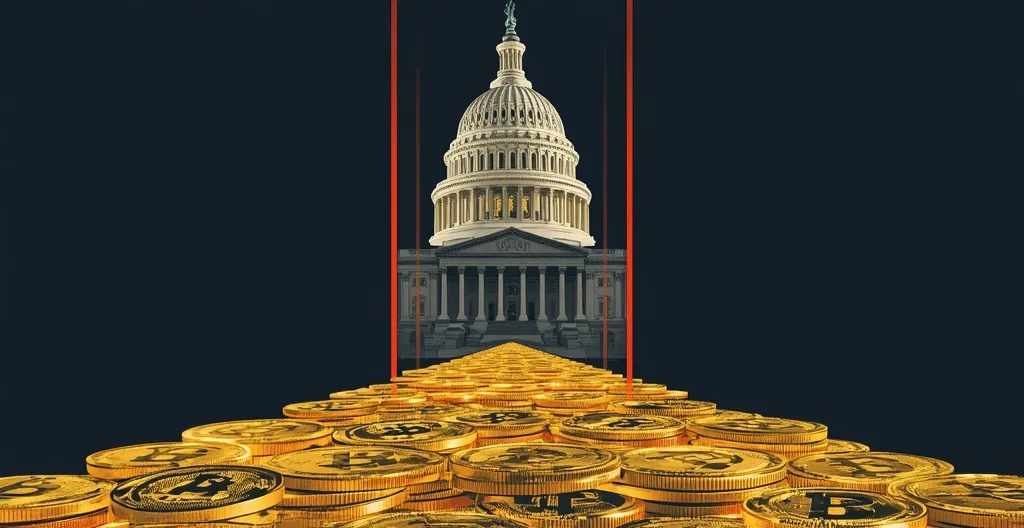
Crypto-linked groups had spent an estimated $176 million across more than 100 U.S. midterm races by October 20, 2026, according to Reuters. That spending signals political muscle, but it cannot by itself move the CLARITY Act through a Senate that has yet to agree to take up the bill.
- Reuters’ estimate: About $176 million in race-related spending through October 20, 2026.
- The Senate hurdle: A September 15, 2026, procedural vote failed 49-50. It was not a vote on final passage.
- The accounting catch: Transfers between committees can be counted twice in headline disbursement totals.
- The test ahead: Election results matter, but votes on agreed bill language matter more.
The figures below reflect information available as of October 28, 2026. They come from different organizations, reporting periods and accounting methods, so they are not directly comparable.
What the $176 million estimate counts
Reuters estimated that crypto-linked groups spent roughly $176 million across more than 100 races through October 20, 2026. It attributed about $150.8 million to Fairshake and its affiliates, and around $25 million to other crypto groups. Those rounded figures add up to approximately $175.8 million.
This is Reuters’ estimate of spending across races. It does not mean one super PAC paid candidates $176 million, or that every dollar went toward promoting the CLARITY Act. The figure reflects Reuters’ review and counting method. Political spending can also support or oppose candidates on issues beyond crypto.
It is also separate from Public Citizen’s estimate of $206 million in crypto-industry corporate political giving through the second quarter of 2026. Giving measures money provided. Spending measures money deployed. The figures cover different periods and different parts of the political-money pipeline, so adding or subtracting them would not produce a meaningful balance.
Why committee disbursement totals don’t equal unique spending
FEC committee summaries for January 1, 2025, through October 14, 2026, show Fairshake reporting $169.51 million in disbursements. That included $139 million in transfers to affiliated committees, $19.41 million in independent expenditures and about $11.10 million in operating expenses.
For the same cycle-to-date period, Defend American Jobs reported $90.06 million in total disbursements, including $88.32 million in independent expenditures. Protect Progress reported $31.25 million in total disbursements, including $29.20 million in independent expenditures.
Add the three headline disbursement totals, and you get $290.82 million. But that is not a reliable measure of unique spending across the network. Money transferred out by Fairshake may show up again in an affiliate’s disbursements when that committee spends it. Disbursements can also cover operating costs, not just election activity.
Subtracting Fairshake’s $139 million in reported transfers leaves $151.82 million. That is a rough calculation based on these committee snapshots, not a verified total of unique spending. It does not trace every dollar through the network or resolve differences in timing and categories. It should not be used in place of Reuters’ separate $150.8 million estimate.
Fairshake reported about $32.98 million in cash on hand as of October 14, 2026. That is its balance on the reporting date, not money already spent. The distinction matters. A committee’s cash, contributions, transfers and election expenditures each show a different part of the picture.
The Senate vote was procedural, not a final verdict
The CLARITY Act, H.R. 3633, aims to divide digital-asset responsibilities between the Securities and Exchange Commission and the Commodity Futures Trading Commission, while establishing rules for intermediaries and asset classification. The House passed the bill 294-134 in July 2025. The Senate has faced a separate obstacle.
On September 15, 2026, the Senate voted 49-50, with one senator not voting, on cloture on a motion to proceed to the CLARITY Act. The motion failed. In plain English, senators did not have the votes to move toward taking up the bill. They did not vote on final passage.
The motion required three-fifths support, ordinarily 60 votes. Starting with 49 yes votes, it would have needed eleven more to reach 60, assuming no other changes. The failed vote blocked or delayed consideration, but it does not show how senators would vote on a final text or a compromise that has not yet been agreed.
For CLARITY to become law, the Senate would still need to take up and pass a text. The House would then need to approve the same version or resolve any differences, and the bill would have to complete the remaining steps to enactment. Campaign spending cannot skip the drafting, bargaining or vote-counting.
Candidate wins are not votes for every clause
Fairshake said 53 of the 58 candidates it backed in primaries or special elections won, a rate of about 91.4%. That is the group’s own tally. It does not show that Fairshake’s spending caused those wins, and it does not cover the full field or predict how those candidates will vote on a negotiated bill.
Fairshake also announced support for 32 House incumbents who had backed CLARITY: 19 Republicans and 13 Democrats. Its initial $6 million House allocation named six incumbents, with $1 million in planned spending for each. Planned allocations are not confirmed expenditures.
The general election was scheduled for November 3, 2026. The results will show who holds office, but a broad “pro-crypto” stance is not a blank cheque for every provision in the bill. Lawmakers may support clearer rules in principle and still disagree over the details.
Reported areas of dispute include restrictions on presidential financial conflicts of interest, whether stablecoin firms can offer rewards, safeguards for decentralized-software developers, and the division of federal and state oversight. These are questions of statutory language, not just campaign messaging.
Ohio illustrates the scale and limits of the numbers
The contest between Republican Sen. Jon Husted and former Democratic Sen. Sherrod Brown was a major focus of crypto-linked spending. Fairshake’s network initially signalled at least $30 million in planned spending against Brown.
By October 15, 2026, Defend American Jobs had reported $46.67 million in cumulative expenditures supporting Husted or opposing Brown, according to the cited filing breakdown. The separate Digital Freedom Fund reported $5.94 million. A count on October 16 combining the two groups came to $52.61 million.
Reuters cited more than $68 million in crypto-related spending around the contest under its broader review. The figures cover different sets of activity: $52.61 million is the combined amount for the two named groups, while Reuters’ figure is broader. Ohio shows how spending can concentrate in one race, but no single Senate seat can pass CLARITY.
Key questions about crypto spending and CLARITY
-
What does the $176 million estimate include?
Reuters’ estimate covers crypto-linked spending across more than 100 races through October 20, 2026. It is not a tally of direct candidate contributions or spending solely on CLARITY advocacy.
-
Did the Senate vote down CLARITY on final passage?
No. The 49-50 vote on September 15, 2026, concerned cloture on a motion to proceed, a procedural step toward considering the bill.
-
Why can committee totals overstate unique spending?
A transfer can appear as a disbursement from one committee, then show up again when an affiliate spends the funds. Adding totals without accounting for transfers can count the same money more than once.
-
Does an election win mean a lawmaker will vote for CLARITY?
No. A candidate’s general support for crypto does not guarantee support for every provision or for a particular compromise.
-
What would show that CLARITY is advancing?
A scheduled Senate vote to proceed, a negotiated bill text, and later committee and floor votes would show concrete legislative movement. Spending totals alone cannot show that political money changed lawmakers’ positions.
Political muscle is not a legislative majority
Large campaign expenditures can put candidates and issues in front of voters and make crypto policy more visible in political contests. They cannot guarantee that elected lawmakers will agree on the same bill, or that a bill with enough votes will match the industry’s preferred version.
The 2025 GENIUS Act established a federal statute for payment stablecoins, but it does not settle CLARITY’s broader market-structure questions. The two measures address different policy ground.
The $176 million estimate measures political spending, not legislative momentum. Clearer signs of progress would be an agreed Senate text, a vote to take it up, and lawmakers’ recorded votes on what the bill actually says.