XRP is stuck in a narrow range while traders wait for Washington to stop hand-waving
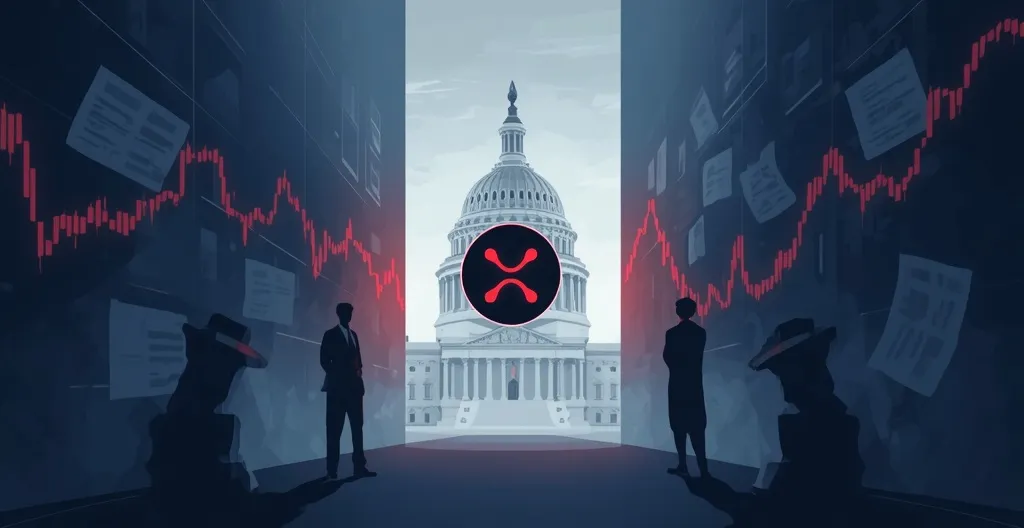
XRP is moving sideways, and the market’s real focus is not the chart. It is the upcoming congressional scrutiny around the CLARITY Act and how U.S. lawmakers may classify digital assets.
- XRP traded at $1.1148 as of July 11 at 9:00 p.m. UTC, according to CoinMarketCap data referenced in the market snapshot
- 24-hour volume fell 46.8%, a sign that conviction is thinning
- Traders are watching regulatory developments more than price patterns
- Commodity or payment asset treatment would likely be viewed more favorably than security treatment
- DTCC and IMF chatter remains unconfirmed and should be treated as speculation, not fact
According to the CoinMarketCap snapshot, XRP was up 1.07% over the previous 24 hours but still down 4.03% over the past seven days. The longer view is uglier: XRP was down 1.80% over 30 days, 22.60% over 60 days, and 16.67% over 90 days.
The token’s market cap sat near $69.6 billion, giving it about 3.15% of the total crypto market. Circulating supply was roughly 62.47 billion XRP out of a maximum supply of 100 billion, while fully diluted valuation was estimated near $111.4 billion. 24-hour volume came in around $587 million, down sharply from the day before.
That volume drop matters. It usually means fewer traders are willing to commit fresh money, which leaves price stuck in a tighter range until something actually changes the mood. Right now, the market feels less like it is finding value and more like it is waiting for permission to care.
Why the regulatory setup matters more than the chart
The main catalyst hanging over XRP is the CLARITY Act, a real piece of legislation in Congress that seeks to define how digital assets are classified. The broad question is whether an asset is treated more like a security, a commodity, or something closer to a payment-focused instrument.
That distinction is not academic. If a token is treated like a security, compliance burdens get heavier, exchanges and custodians become more cautious, and institutional adoption gets harder. If it lands closer to a commodity or payment asset framework, sentiment usually improves because the legal fog lifts a little.
For XRP, that legal framing has been a long-running source of uncertainty. The market is not just asking whether the token has a use case. It is asking whether that use case can exist inside a U.S. rulebook without getting kicked in the teeth by enforcement risk.
The CLARITY Act text, according to Congress.gov, refers to concepts such as “digital commodity” and “mature blockchain system” and includes disclosure requirements for certain issuers and intermediaries. It also contains language indicating that those disclosure obligations do not automatically make a digital commodity a security.
In plain English: the bill is trying to give digital assets a clearer legal lane without turning the whole market into a free-for-all. That is not crypto utopia, but it is a lot more useful than the current setup, where policy often feels like it was drafted by a committee with a grudge.
What traders are actually watching
Support near $1.10 is the level being watched most closely by traders. That is not a magical number blessed by the gods of technical analysis, but it is a practical marker for whether buyers are willing to defend the range.
If support holds and regulatory headlines turn constructive, XRP could see a sharper reaction because the market has been so compressed. If volume keeps fading and support breaks, the path of least resistance is lower.
This is a classic case of headline risk, meaning price is being driven more by news, rumors, and policy expectations than by organic demand or clean technical structure. The token is in a corrective phase, and the market is waiting for a narrative with actual teeth.
Stablecoin policy is part of the same fight
The broader policy backdrop is not just about XRP. Stablecoin regulation is also moving closer to the center of the payments conversation, including initiatives like the GENIUS Act.
That matters because stablecoins and XRP often live in the same conversation about remittances, settlement, and cross-border payments. The Federal Reserve has said cross-border payments are generally slower, more expensive, and less transparent than domestic ones, and that payment stablecoins could help reduce some of those frictions.
That does not mean XRP is automatically the winner. It does mean the underlying problem XRP has long claimed to solve is very real. The old correspondent-banking system is bloated, slow, and expensive, which is exactly why policymakers keep circling back to alternatives.
It also means XRP is competing in a crowded lane. Regulated stablecoins, bank rails, and other settlement systems are all chasing the same payments use case. Useful networks will survive. Marketing fluff, not so much.
Rumors are flying, but not all of them deserve oxygen
There has been plenty of chatter around Circle, DTCC, the IMF, X Money, and Open USD. Some of those names matter in the broader payments debate, but the market also has a habit of turning half-formed speculation into fake certainty.
Circle’s regulatory progress is relevant because it shows stablecoin issuers are being pulled deeper into the mainstream financial system. That trend reinforces the idea that crypto payments are becoming less of a side quest and more of a serious policy topic.
But there is no confirmed announcement that XRP or the XRP Ledger is being directly integrated into DTCC systems. DTCC is a major U.S. post-trade clearing and settlement infrastructure provider, so a real link would be significant, but significance is not evidence.
The same caution applies to claims that the IMF referenced the XRP Ledger in cross-border payments discussions. No provided source confirms that. Until there is a direct statement or verifiable report, that belongs in the rumor pile with the rest of the internet’s favorite overcooked narratives.
For clarity: XRP is the token, while XRPL is the XRP Ledger network. That distinction matters, because people online love blending the two together when the story sounds better that way. Convenient, sure. Accurate, not always.
What a friendlier classification could actually change
If XRP is viewed more like a commodity or payment asset under a clearer U.S. framework, that would likely help market sentiment. It could also make life easier for institutions that care about custody, compliance, and whether holding the asset might trigger regulatory headaches.
That does not guarantee adoption. It does not guarantee price appreciation. It does not even guarantee the market will react rationally, which is asking a lot from crypto traders on a good day.
What it would do is reduce uncertainty. And in institutional markets, uncertainty is expensive. Funds, exchanges, and payment firms tend to avoid assets with unresolved securities risk because that can lead to delistings, restricted access, or compliance problems nobody wants on the quarterly report.
So yes, the legal framework matters. A lot. But it should not be confused with an automatic bull case. Regulatory clarity can create room for growth. It does not manufacture demand out of thin air.
Key questions and takeaways
-
Why is XRP trading sideways?
Because trading activity has cooled and the market is waiting for a policy catalyst. Weak volume suggests buyers and sellers are both sitting on their hands for now. -
Why does the CLARITY Act matter?
It could help define how digital assets are classified in the U.S. That matters because legal status affects exchange access, custody, compliance, and institutional appetite. -
Would XRP benefit from commodity or payment-asset treatment?
Probably, from a market-perception standpoint. It would reduce legal uncertainty, though it would not guarantee adoption or a higher price. -
Is there confirmed DTCC integration with XRP or XRPL?
No. There is no confirmed announcement showing that XRP or the XRP Ledger is directly integrated into DTCC systems. -
Are IMF references to XRPL verified?
Not with the information available here. Those claims remain unconfirmed and should be treated as speculation unless better sourcing appears. -
What does the falling volume tell us?
It usually signals fading conviction. When volume dries up, price often stays trapped until a real catalyst breaks the standoff.
XRP is sitting at the intersection of market structure and policy risk. The next move may depend less on a clean technical breakout and more on whether Washington finally gives digital assets something better than vague threats and bureaucratic sludge.
That kind of clarity would not solve everything, but it would separate serious infrastructure from the usual crypto theater. And frankly, the market could use a lot less theater.
Further reading
A few useful angles on the CLARITY Act, XRP, and the broader payments fight worth keeping on the radar: