World Liberty Financial’s planned Maldives token sale was supposed to turn a luxury resort into blockchain-based finance. Instead, regional conflict disrupted air travel, tourism took a hit, and the project ran straight into the part of tokenization that never fits neatly on a pitch deck: real life.
- MALD1 was tied to resort loan-servicing revenue
- Maldives tourism was hit by the Iran conflict
- Real-world asset tokens still depend on physical reality
- Blockchain does not cancel out geopolitics
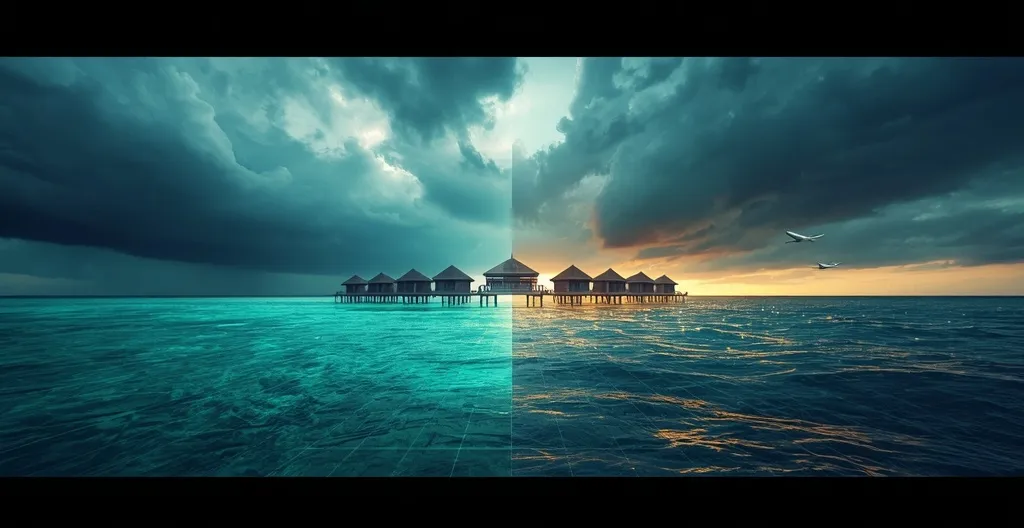
On August 13, Bloomberg reported that World Liberty Financial’s planned token sale for Trump International Hotel and Resort, Maldives had been postponed indefinitely. The delay followed a regional conflict involving Iran, which disrupted air travel and sharply reduced tourist arrivals in the Maldives. Trump’s World Liberty Financial delayed its Maldives resort.
The token, called MALD1, was designed to give accredited investors exposure to loan-servicing revenue from the resort development. That detail matters. This was not a token giving direct ownership of a beach villa or a simple slice of hotel profits for retail buyers. It was a securities-style structure built around debt-related cash flow from a luxury development that does not yet exist.
World Liberty Financial and Securitize structured the deal under Rule 506(c) of Regulation D for accredited U.S. investors and Regulation S for non-U.S. buyers in offshore transactions. In plain English, the offer was built to fit existing securities exemptions instead of pretending the rules do not apply. That is the compliant version of tokenization. Less “trust me, bro, ” more “please read the filing.”
The project was announced on February 18, 2026, alongside Dar Global and Securitize. Dar Global, the London-listed developer, is building the resort on a private island roughly 25 minutes by speedboat from Male. Plans call for around 100 ultra-luxury beach and overwater villas, with completion targeted for 2030. The Trump Organization is licensing its brand and hospitality standards, but it is not the issuer of the tokens. World Liberty Financial to Tokenize Trump International.
That structure matters because it makes the legal and financial plumbing clearer. The Trump name gives the project branding power. Securitize provides the securities infrastructure. Dar Global handles the development. But the economics still depend on whether a high-end resort in the Maldives can attract enough travelers, for long enough, to make the revenue stream worth tokenizing in the first place.
And that is where the market reality turned ugly.
The Maldives is heavily dependent on tourism, which accounts for more than 60% of foreign exchange receipts. According to the Maldives Ministry of Tourism, arrivals fell sharply in early March after the conflict disrupted regional travel routes. Reports cited by the ministry showed tourist arrivals down 23.4% in the first week of March 2026 compared with the same period in 2025, while average daily arrivals in early March dropped 41.5% compared with February averages. The government projected a revenue shortfall of $80 million to $100 million if the disruption lasted a month. Daily Tourist Arrivals to Maldives Plummet Amid Middle East.
That is exactly the kind of shock tokenized real estate hates. A token can move in seconds. A resort cannot. A blockchain can record ownership claims, payment flows, and transfer history. It cannot make flights land on time or convince tourists to ignore a regional conflict and keep the vacation bookings rolling.
World Liberty Financial’s co-founder Zachary Folkman framed the project as “a new model for how real-world value meets blockchain transparency.” The pitch sounds modern and polished. The problem is that transparency does not remove risk; it only makes the risk easier to see.
Dar Global CEO Ziad El Chaar took a more careful tone, saying the company “continues to review development and launch schedules for its global projects in line with market conditions, regulatory requirements and long-term strategic goals”. That is corporate language for a very simple idea: if the region gets messy and the numbers get shakier, nobody sane rushes a token sale into the grinder.
The Maldives delay also lands in the middle of a broader credibility problem for WLFI. The company launched its governance token sale in October 2024, initially aiming to raise $300 million by selling 20 billion tokens at $0.015 each. Early demand was weak enough that the target was cut to $30 million, before a second tranche of 5 billion tokens at $0.05 helped bring total proceeds to $550 million from more than 85, 000 participants.
That is a lot of money, but fundraising volume is not the same thing as a healthy structure. WLFI has already become a case study in how fast crypto enthusiasm can curdle into distrust. The Trump family receives 75% of net proceeds from WLFI token sales, and Trump is listed as “co-founder emeritus.” Trump’s 2025 income from the venture was reported at roughly $800 million.
WLFI also has a price chart that looks like a cautionary tale with a ticker. WLFI peaked at about $0.331 in September 2025 and had fallen to around $0.055 by late July 2026, a decline of roughly 83%. Public estimates say holders have suffered $674 million in combined realized and unrealized losses. One analyst, after WLFI borrowed $75 million on its own platform in April 2026, warned investors not to become “exit liquidity.”
That phrase is blunt, but it captures an ugly truth in crypto: sometimes the latecomers are left holding the bag while insiders, early buyers, or connected participants cash out. A governance token is supposed to imply collective ownership or participation. In practice, it can end up looking suspiciously like corporate theater with a blockchain sticker slapped on the front.
Justin Sun’s federal lawsuit against WLFI added another layer of mess. In April 2026, Sun said WLFI froze 540 million of his unlocked tokens and 2.4 billion locked tokens and excluded him from governance. WLFI countersued in May, accusing Sun of defamation and market manipulation. Sun was one of WLFI’s largest individual investors, with approximately $75 million in purchases.
None of that proves the Maldives token was doomed on day one. It does show that WLFI is not operating from a position of broad trust or clean optics. When a project already has price pressure, governance disputes, and public legal fights, a delay in a new token sale starts to look less like bad luck and more like a symptom.
The Securitize angle is more respectable than the average crypto circus, at least. Securitize is described as BlackRock-backed and serves as the registered transfer agent and compliance engine for the offering. That matters because tokenized securities are not magic internet money. They still need cap tables, compliance, transfer records, and legal structure. The blockchain can help with those mechanics. It cannot replace them.
The broader tokenized real-world asset market has grown to between $26 billion and $34 billion in 2026, excluding stablecoins, so this is not some fringe experiment anymore. Institutions are clearly interested. But tokenized real estate remains one of the slowest adoption areas, and for good reason: it has weak secondary trading, ugly price discovery, and heavy exposure to local conditions. A token can be global. A building, a resort, or a development site is still stuck on the ground, where weather, policy, labor, capital, and geopolitics all get a vote.
That is the real lesson in the Maldives delay. Tokenization can clean up the ledger. It cannot clean up the world. The sector’s size is real, and the capital is real, but so are the limits, even if the hype merchants would prefer to pretend otherwise. Citigroup’s long-range optimism on tokenized real-world assets hitting $8.2T by 2030 may sound sexy on a slide deck, but the road there runs through actual buildings, actual laws, and actual geopolitics. No amount of glossy token branding gets to repeal physics.
Recent numbers also show that momentum is not the same thing as inevitability. Tokenized real-world assets surged to $27.6B in April 2026, yet that growth came against a backdrop of market stress, which is exactly when the shiniest narratives get exposed. And even the broader market milestone of tokenized real-world assets hitting $20B in 2026 comes with a giant asterisk: adoption is real, but so are the bottlenecks, the regulatory friction, and the tendency for some players to slap “innovation” on top of old-fashioned financial extraction.
There is also a growing regulatory reality check. The SEC’s Statement on Tokenized Securities makes one thing clear: putting securities on-chain does not magically transform them into unregulated internet coupons. The law still applies, whether the asset is a share certificate, a bond, or a token with a slick logo and a venture-backed pitch deck. Shocking, we know.
That compliance-heavy approach is probably the only version of tokenization that stands a chance of lasting. It is less glamorous than the “number go up” brigade wants, but it is also less stupid. The market can absolutely use blockchain rails to improve settlement, transparency, and access. What it cannot use is delusion dressed up as due diligence.
Key questions and takeaways
-
What is MALD1?
MALD1 is the planned tokenized security tied to loan-servicing revenue from the Trump-branded Maldives resort project. It was aimed at accredited and offshore investors under existing securities exemptions. -
Why was the sale delayed?
Regional conflict involving Iran disrupted air travel and hit Maldives tourism, making the project’s revenue assumptions harder to trust. A token tied to a resort is only as strong as the resort’s real-world economics. -
Why does this matter for real-world asset tokenization?
Because tokenization does not erase physical risk. It can improve recordkeeping and access, but it still depends on construction, tourism, demand, and geopolitics. -
Is tokenized real estate useless?
No. It can be useful for access and structure, especially in institutional settings. But it is still one of the hardest categories to price and trade because the underlying assets are slow, local, and exposed to shocks. -
What does WLFI’s broader track record suggest?
Big fundraising numbers do not guarantee a sound project. Falling token prices, legal fights, and concentration of proceeds are all red flags that investors should not ignore.
Blockchain can track value. It cannot make a resort immune to war, travel shocks, or bad assumptions.
Further reading
One more piece on the same mess of branding, tokenization, and real-world turbulence: