
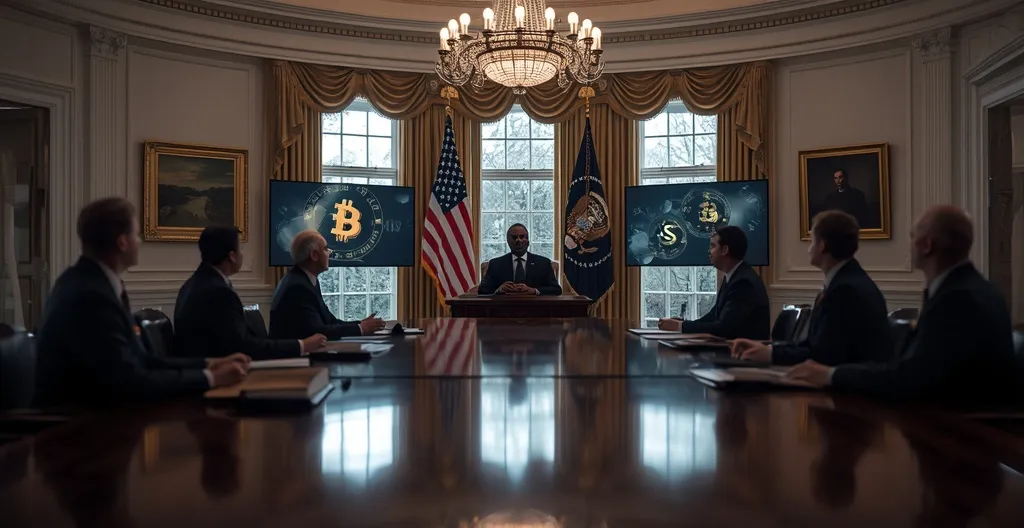
Donald Trump expected to meet with crypto executives at the White House next week, and this one looks bigger than a polite handshake and a few camera flashes.
- The White House says Trump will host a crypto summit on Friday, March 7
- Crypto founders, CEOs, and investors are expected to attend
- A January 2025 executive order put digital assets on the federal policy map
- The administration has drawn a hard line against a U.S. CBDC
- Stablecoins and seized crypto could be part of the policy conversation
The headline is simple. The implications are not.
According to the White House, President Trump will host and deliver remarks at the first White House Crypto Summit on Friday, March 7. The event is expected to bring together prominent founders, CEOs, and investors from the crypto industry, along with members of the President’s Working Group on Digital Assets.
That matters because it moves crypto from the usual political back-bench treatment into the room where policy gets drafted, fought over, and occasionally mangled beyond recognition. A summit is not the same thing as a private meeting, and it is not just another lobbyist photo-op. It signals that digital assets are being treated as a real federal issue.
The bigger proof is already on paper.
On January 23, 2025, the White House issued a presidential action titled Strengthening American Leadership in Digital Financial Technology. The order defines digital assets broadly to include cryptocurrencies, digital tokens, and stablecoins. It also creates the President’s Working Group on Digital Asset Markets and revokes Biden-era Executive Order 14067.
That revocation matters because it marks a clean break from the prior administration’s regulatory posture. In practical terms, the new order replaces an older framework with one that is openly friendlier to digital assets and far more skeptical of the previous playbook.
The order’s most politically loaded move is its stance on central bank digital currencies, or CBDCs. A CBDC is a state-issued digital dollar. Supporters argue it could modernize payments and improve settlement. Critics warn it could expand surveillance and give the government too much control over money. The Trump administration’s order prohibits U.S. agencies from establishing, issuing, promoting, or developing a CBDC unless required by law.
That is a bright red line for bitcoiners and privacy advocates, and frankly, it is not hard to see why. If you do not trust bureaucrats to handle your bank account without acting like hall monitors, the idea of a programmable government money system is not exactly soothing.
Stablecoins are likely to get attention too, and for good reason. These are crypto tokens designed to track the value of a currency like the U.S. dollar. They are used heavily for trading, payments, and settlement across the crypto market, which means Washington has every reason to care about how they are issued, backed, and supervised.
Stablecoins are not just a crypto niche. They sit close to the dollar system, payment rails, Treasury markets, and compliance rules. If lawmakers and regulators get this wrong, they will not only annoy crypto users, they will create headaches for a lot of legitimate financial activity as well.
The executive order also raises the possibility of a national digital asset stockpile, using cryptocurrencies lawfully seized by the federal government. That is not normal Washington boilerplate. The practical idea is that the government could hold certain seized digital assets rather than automatically liquidating them. Whether that is smart stewardship or just a repackaging of confiscated property is a separate debate, and a spicy one.
There is still plenty we do not know. The exact guest list has not been fully detailed, the full agenda is unclear, and no concrete policy announcements have been locked in publicly. It is also not confirmed from the available reporting whether the White House gathering is a one-on-one meeting with executives or the broader summit described by the White House.
What is clear is that crypto policy is no longer being handled as a side issue. It is being folded into formal federal strategy, with stablecoins, CBDCs, market structure, and possibly seized assets all in the mix. That is a big shift from the old habit of pretending crypto could be ignored into submission.
Of course, a summit is still just a summit. Political theater can be useful, but it is not regulation, and it is definitely not a substitute for coherent law. If this ends in polished statements and no follow-through, the market will eventually stop caring. The hard part is turning friendly rhetoric into actual rules that are clear, durable, and not written by the loudest rent-seekers in the room.
Key takeaways
-
What is Trump expected to do next week?
The White House says Trump will host and deliver remarks at a crypto summit on Friday, March 7. -
Why does this matter for crypto?
It shows digital assets are being treated as a formal policy priority in Washington, not just a speculative corner of the market. -
What did the January 2025 executive order change?
It created the President’s Working Group on Digital Asset Markets, supported digital asset growth, and revoked Biden-era Executive Order 14067. -
What is the White House stance on CBDCs?
The order blocks U.S. agencies from establishing, issuing, promoting, or developing a CBDC unless required by law. -
Why are stablecoins such a big deal here?
Stablecoins are central to crypto payments and trading, and policy decisions around them can affect the dollar system, compliance, and market structure. -
Is the agenda fully known yet?
No. The attendee list, exact topics, and any concrete outcomes have not been fully disclosed.
Quick Q&A
-
What does “expected to meet” mean?
It means the gathering was being reported or planned, but not every detail was fully confirmed in the available information. -
What is a crypto executive?
It usually means a founder, CEO, investor, or senior decision-maker from a cryptocurrency-related company or organization. -
Why does the White House setting matter?
Because a White House meeting or summit means the issue has reached the level of national political attention, not just industry networking. -
Does this make the U.S. government pro-crypto?
It makes this administration much friendlier to digital assets than the last one. Friendly rhetoric, though, is not the same thing as good policy. -
What should people watch for next?
Any real movement on stablecoins, market structure, tax treatment, enforcement priorities, or the government’s approach to seized crypto assets.
Crypto leaders meet at Trump's summit with strategic reserve focus, and that framing tells you where the political temperature is heading.
For a more direct read on the administration’s anti-CBDC stance, see Prohibition of Central Bank Digital Currencies in the same presidential action that set this whole policy reset in motion.
Trump Bans CBDCs, Boosts Digital Assets and Blockchain in the executive order that put the U.S. on a much more crypto-friendly footing.
And if stablecoin politics turns into the next bureaucratic food fight, Trump Signs GENIUS Act: Stablecoins Legalized, But at What is the kind of follow-up worth keeping close by.
One more thing: the White House has already shown it can turn crypto into a formal political event, and some reporting even suggests Error extracting content when the usual banking-crypto fault lines start colliding with legislation. No surprise there. When old-guard finance and digital assets share a room, sparks usually fly before the small talk does.
For context on the broader messaging from the administration, revisit Remarks at the White House Digital Assets Summit and compare the tone to the current push. That contrast says a lot about how quickly Washington can shift when the political winds change.