
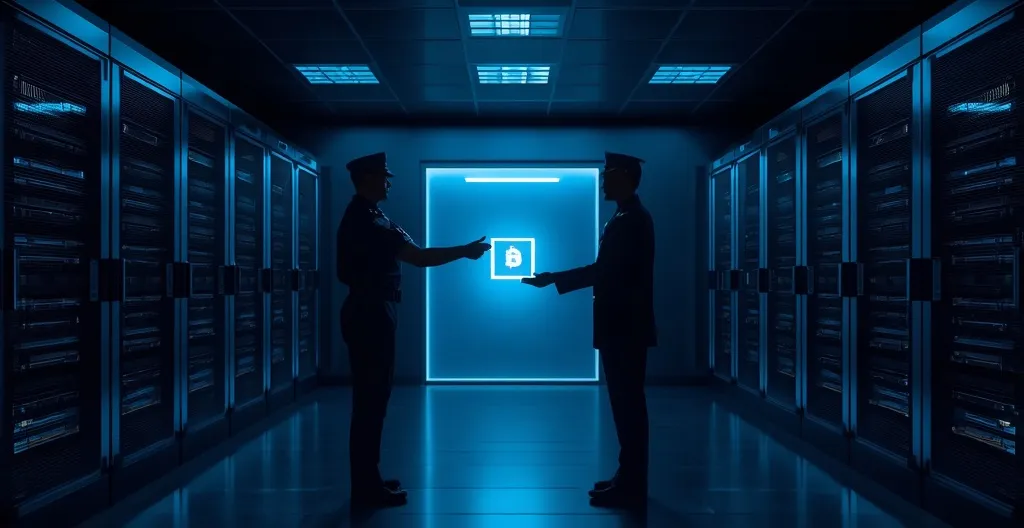
South Korea’s police are set to hand custody of seized cryptocurrencies to Dunamu, the company behind Upbit, after it ranked first in a one-year contract worth 267 million won, or about $195, 000.
- Dunamu ranked first in the police procurement process.
- The contract is worth 267 million won and runs for one year.
- Security and operational readiness beat low pricing in the scoring.
- Earlier missing-Bitcoin incidents helped push authorities toward outside custody.
Procurement records published by South Korea’s Public Procurement Service showed Dunamu earned 94.73 points in the tender, ahead of Korea Digital Asset Custody (K-DAC) with 91.29 points and Hecto Wallet One with 87.27 points. Dunamu received just 10 points for bid price, but its 84.73-point technical score carried it to the top.
That ranking makes Dunamu the preferred negotiating bidder, which means the company is expected to win the contract if talks are completed successfully and the police do not move down the list to lower-ranked firms. In plain English: the deal is not fully signed yet, but the finish line is close enough to smell.
The contract would transfer custody of cryptocurrencies seized during police investigations to an outside institution. That may sound like a dry procurement line item, but the stakes are very real. In crypto, custody means controlling the private keys that prove ownership of the assets. Lose the keys, and the coins are effectively gone. There is no password reset fairy waiting in the wings.
Reported tender requirements included immediate acceptance of full custody of seized cryptocurrencies, a round-the-clock response system, and full compensation if assets were lost due to hacking. Those conditions clearly reward firms with mature security operations, staffing, and enough financial muscle to take on liability if something goes wrong. For a solid primer on the basics, see Digital Asset Custody 101: Guide to Direct Custody, Wallet.
That setup naturally favors large operators like Upbit’s parent company. It also explains why some in the custody industry grumbled that the competition “wasn’t an easy game from the start, ” as one official put it. That complaint may be overstated, but it is not hard to see where it comes from: if a tender demands 24/7 readiness and a promise to make the state whole after a hack, smaller custodians start the race with one leg tied to a chair. Dunamu Wins Bid for South Korea Police Crypto Custody and the whole setup was always going to favor the biggest, best-prepared shop in the room.
The National Police Agency pushed back on the idea that the process was tilted, saying the operator had been selected through “a fair competitive process.” That can be true even if the rules themselves naturally advantage bigger players. Fair process and fair outcome are not always the same thing.
And the police have good reason to care more about operational reliability than bargain pricing. South Korean authorities have already faced embarrassing incidents involving missing seized Bitcoin. Local reports said Bitcoin seized by the Gwangju District Prosecutors’ Office was lost, and police later confirmed seized Bitcoin had gone missing in a separate 2022 incident. Those failures made law enforcement’s in-house handling of crypto look less like prudent administration and more like a very expensive way to misplace evidence. Revealed: How South Korean police lost $1.4m worth of BTC is exactly the kind of mess that spooks agencies into outsourcing.
That history helps explain why outsourcing custody now looks more appealing. Outside providers with established infrastructure, security teams, and around-the-clock monitoring are better positioned to store seized digital assets without turning them into a public relations disaster. This is one of those unglamorous corners of crypto where ideology runs headfirst into operational reality.
Crypto loves to talk about decentralization, self-sovereignty, and getting rid of middlemen. Then a government agency needs somewhere safe to keep confiscated assets, and suddenly the most attractive option is a large centralized exchange operator with the deepest bench. Not exactly a cypherpunk victory parade, but it is hard to argue with the logic if the goal is to keep the keys from disappearing. Dunamu’s parent company has long been central to this conversation, including when Upbit operator Dunamu wins bid for South Korea police became the name attached to this latest custody push.
The financial scale of the contract is modest for Dunamu, but the reputational upside is larger than the headline number suggests. Being trusted by the National Police Agency to handle seized digital assets is a signal that the company’s infrastructure is seen as reliable enough for sensitive public-sector work. In institutional crypto, that kind of trust can matter more than the contract value itself.
It may also normalize outside custody for public agencies in South Korea. If this arrangement works, it could encourage broader use of specialist custodians for confiscated crypto. That would be a quiet but meaningful shift: less amateur hour, fewer key-handling mistakes, and a little more grown-up infrastructure where it counts.
Dunamu is also juggling broader corporate and regulatory pressures. Earlier this month, it disclosed that completion of its planned all-stock share swap with Naver Financial was postponed for a second time until Dec. 31 because several regulatory approvals remain pending. The company is still pushing forward, but the paperwork is moving at the speed of a government filing cabinet being nudged uphill. The delay came after Naver Delays Naver Financial, Dunamu Share Swap by Another round of regulatory friction, because of course it did.
Put together, the custody win and the delayed share swap show the same thing from two angles: Dunamu is operating in a tightly regulated environment where scale helps, scrutiny is constant, and nothing important gets done without a lot of approvals. That is not a bug. It is the reality of being one of South Korea’s biggest crypto firms. Earlier deal chatter even included rumors that Naver Acquires Upbit Operator Dunamu in Bold Equity Swap to reshape the local market, which shows just how central Dunamu has become to South Korea’s crypto plumbing. For more context on the broader market power plays, Dunamu leads bids to become official custodian of South is another useful marker of how this bid fits into a larger institutional land grab. And yes, there’s still plenty of corporate ambition in the mix, including the kind of bank-crypto overlap seen when Hana Bank Invests $670M in Dunamu, Expanding South Korea’s crypto banking push.
Key questions and takeaways
-
Why did South Korea’s police seek an outside custodian?
Because prior missing-Bitcoin incidents exposed how badly seized crypto can be handled in-house. Outsourcing custody is a practical response to a very expensive problem. -
Why did Dunamu come out on top?
Dunamu ranked first with 94.73 points, helped by a strong technical score. The tender appears to have rewarded operational depth and security more than low pricing. -
Did smaller custody firms have a real shot?
Formally, yes. Practically, the requirements seem to have favored firms with 24/7 infrastructure, deeper compliance resources, and the ability to absorb hacking liability. -
What does this say about crypto custody?
Custody is where crypto’s theory meets reality. If the keys are mishandled, the assets are gone, so whoever stores them needs real security, not just marketing fluff. -
Does this matter beyond the contract itself?
Yes. Even though the deal is small financially, it strengthens Dunamu’s standing as institutional infrastructure and could shape how South Korean agencies handle seized digital assets going forward.
The bottom line is simple: South Korea’s police want the safest hands on seized crypto, and Dunamu looks like the safest bet they found. The state is not looking for ideological purity. It wants the coins kept where they belong, and this time it is outsourcing the job to a company built for exactly that kind of pressure. For readers tracking the company’s moves, this latest custody role sits alongside the broader Dunamu-Naver saga that has been building for months.