
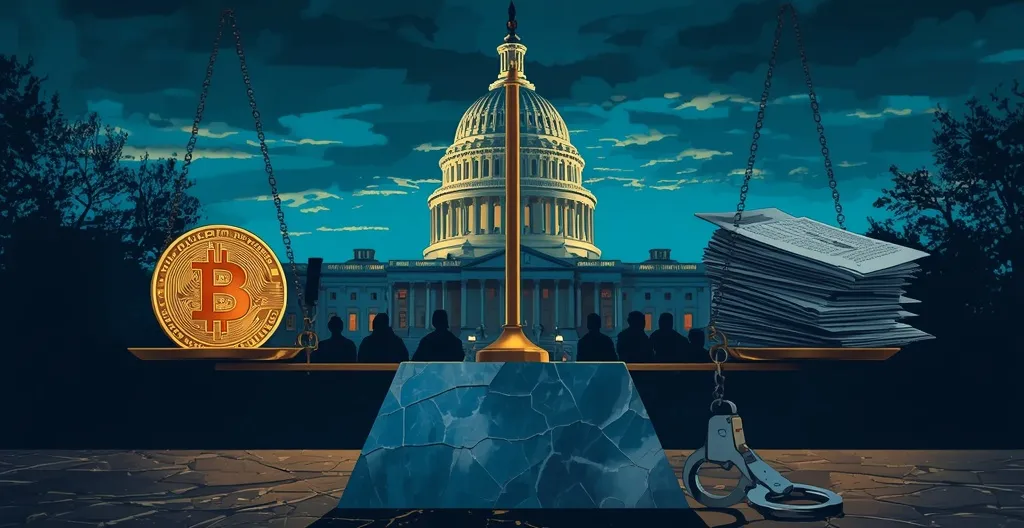
Ethics fight threatens Senate crypto bill as July vote target comes into view
A merged Senate draft of the crypto market-structure bill could land as early as next week, but an ethics standoff may still be enough to kill it before it reaches the floor vote targeted for the week of July 20.
- Combined draft could drop next week
- Floor vote target: week of July 20
- Ethics restrictions are the main blocker
- 60 votes still look out of reach
According to reporting cited by CoinDesk, Senate staff are working on a merged version of the Digital Asset Market Clarity Act, combining text from the Banking and Agriculture Committees. The draft is said to include more than 70 pages of new material and a greater emphasis on consumer protections than either committee’s standalone version.
That does sound like progress. It is. But Washington has a habit of turning progress into a hostage situation.
The bill’s biggest obstacle is an ethics demand from Senate Democrats. They want restrictions that would bar senior government officials, including the president, from maintaining business ties to the crypto sector. That is not a side issue or a rhetorical flourish. It is the fight now, and sources familiar with the talks told CoinDesk that progress has “slowed to a crawl.”
The political math is brutal. In the Senate, major legislation usually needs 60 votes to overcome a filibuster. Without enough Democratic support, the bill cannot clear cloture, no matter how many press releases get written about innovation, consumer protection, or America’s alleged need to “lead” something.
One compromise idea under discussion would give state attorneys general the ability to sue over ethics violations, but nothing has been locked down. Even worse for supporters, the two Democrats who voted to advance the Banking Committee version have warned they may not support the final bill if the ethics question remains unresolved.
That is the kind of problem that turns a close vote into a dead one.
The clock is also nasty. The Senate has only three remaining weeks in July and the first week of August before recess, and a defense spending bill may compete for floor time. If the merged draft is released next week and floor action follows in the week of July 20, lawmakers would have roughly two weeks to settle the remaining disputes and get something through the chamber.
That is not much time in a place where a single objection can slow everything down long enough to make a gerbil look efficient.
There are still other unresolved issues too. Federal preemption remains on the table. In plain English, preemption is the legal idea that federal law overrides conflicting state law. Crypto firms generally want one national rulebook instead of 50 different ones, while states often want room to keep their own consumer-protection rules. That tension has been a recurring headache in U.S. crypto policy for years.
The composition of the SEC and CFTC also remains unresolved. Those are the two agencies at the center of U.S. crypto oversight, with the SEC generally focused on securities and the CFTC on commodities markets. On July 9, the White House sent a letter to Senators John Thune and Chuck Schumer saying Democrats had not submitted names for minority roles on those commissions. Democrats had previously accused Trump and Thune of blocking the normal nomination process for independent agency seats.
That may sound like bureaucratic trivia, but it matters. Commission seats shape how these agencies enforce the rules, how aggressive they are, and how much daylight exists between policy and political warfare.
Another thread running through the bill is the Blockchain Regulatory Certainty Act, or BRCA, which Senator Ron Wyden of Oregon backed in a July 8 letter to Senate leadership. BRCA would make clear that crypto developers are not treated as money transmitters under federal regulations if they are not handling customer assets.
That distinction is central to decentralized finance, or DeFi. A developer who writes software is not the same thing as a company holding customer funds and moving them around like a traditional money service business. Treating both the same way is lazy regulation at best. At worst, it is a neat little trick for crushing open-source development while pretending it is just “compliance.”
At the same time, the warning from critics is fair: if lawmakers write that carve-out too loosely, bad actors will hide behind the word “software” while doing plenty of very real financial business. That is the ugly part of crypto regulation. The line between legitimate decentralization and cover-for-shenanigans can get blurry fast, and scammers have never missed a chance to exploit a sloppy definition.
The underlying legislation is not a free-for-all giveaway to industry, either. The House CLARITY Act text available on Congress.gov includes disclosure requirements, intermediary rules, disqualification provisions, and SEC rulemaking deadlines. It also touches federal preemption. In other words, Congress is not just deciding whether crypto exists. It is deciding who has to report what, who can operate, and which rules win when state and federal law collide.
That is why some lawmakers may be open to a market-structure bill even if they are not crypto cheerleaders. A serious framework can give the industry legal clarity while still preserving guardrails for investors and users. That is the bargain. Not a blank check. Not a ban. A framework.
Whether the Senate can finish that job in time is the real question.
Even if the chamber passes a merged text, the House would still have to agree to the final version, and any differences between the two chambers could force more negotiation. The House has also been described as paralyzed by Republican infighting, which is not exactly the sort of environment that screams “smooth passage.”
So the path forward is narrow. The merged draft could arrive next week. A vote could be aimed at the week of July 20. But the ethics dispute, the unresolved agency-seat fight, the preemption questions, and a crowded floor schedule all point in the same direction: this thing is hanging by a thread.
The bigger lesson is simple. Crypto regulation in Washington is no longer just about whether lawmakers should act. It is about what kind of market structure they are willing to write, who it will bind, and whether the people drawing up the rules are allowed to keep their hands in the same business they are supposed to oversee.
That is not a small detail. It may be the whole damn bill.
Key takeaways
-
Why is the Senate crypto bill stuck?
The biggest roadblock is an ethics dispute over whether senior officials, including the president, should be barred from maintaining business ties to the crypto sector. Without enough Democratic support, the bill cannot reach the 60 votes needed to advance. -
What is in the merged draft?
The combined text pulls together work from the Senate Banking and Agriculture Committees and is said to add more than 70 pages, with stronger consumer-protection language than either committee draft on its own. -
Why does BRCA matter?
The Blockchain Regulatory Certainty Act provisions would keep non-custodial crypto developers from being treated as money transmitters if they are not handling customer assets. That is a major issue for DeFi and open-source software builders. -
What is the biggest timing risk?
Congress is running into recess, floor time is tight, and a defense spending bill may take priority. Even if the draft appears next week, lawmakers may not have enough time to settle the remaining fights and pass it.
Further reading
A few related pieces for anyone tracking the Senate scramble, the policy knives, and the parts of crypto Washington would rather keep fuzzy.
- Ethics Deadlock Threatens Senate Crypto Bill Despite July
- Wyden Expands Epstein Investigation with Probe of Hundreds of Suspicious Bank of New York Mellon Transactions
- Newest Version of Crypto Clarity Act May Drop as Soon as Next Week, Sources Say
- U.S. Faces Brain Drain as BRCA Fight Could Protect Blockchain Developers
- Senate Crypto Bill Delay, Binance Scrutiny and Bitcoin Quantum Risk Shake the Market
- U.S. Stablecoin Yield Ban Advances in Digital Asset Market Clarity Act Draft