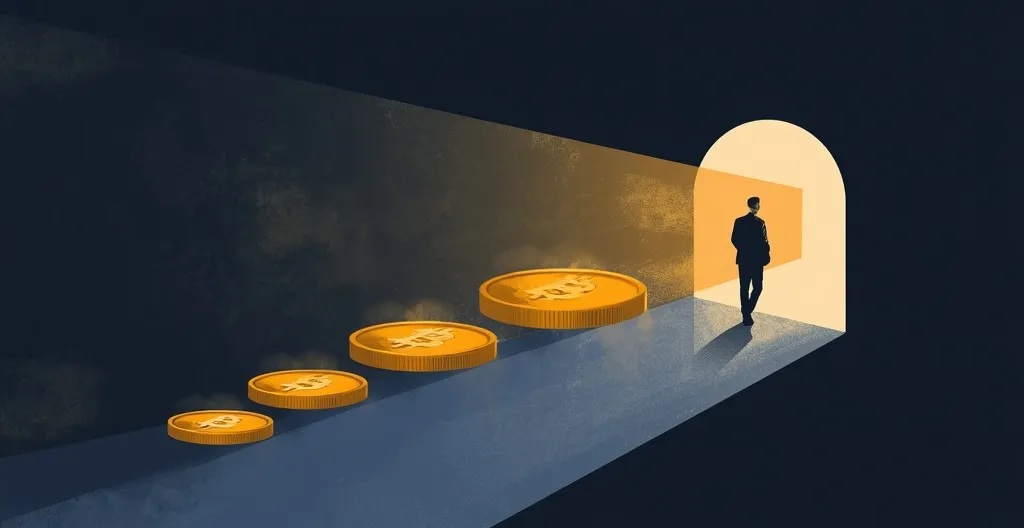
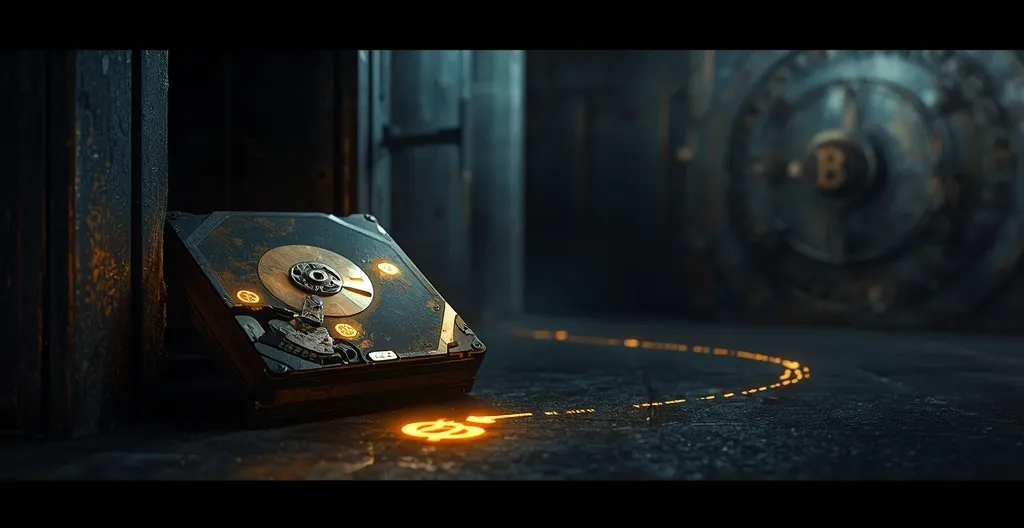
A Bitcoin wallet untouched since Aug. 3, 2010 has come back to life, moving 40 BTC in a transfer that was included in Bitcoin block 957220. Arkham flagged the address as a Satoshi-era wallet waking up after nearly 16 years.
- 40 BTC moved from a 2010 wallet
- Arkham flagged it as Satoshi-era activity
- Old wallet movement is not proof of selling
- “Lost coins” remains a messy debate
At the time of the transfer, the coins were worth about $2.54 million. Back in 2010, Bitcoin traded for only a few cents, which is why early wallets still trigger the same reaction every time they stir: equal parts fascination, speculation, and the usual “who’s dumping?” panic.
The return of a wallet this old matters because it lands right in the middle of one of Bitcoin’s most stubborn debates: how many coins are truly lost forever, and how many are simply dormant, waiting in storage like digital antiques?
The label “Satoshi era” refers to Bitcoin’s earliest period, when Satoshi Nakamoto was still publicly active and mining was often done on ordinary computers, not the industrial-scale operation people associate with Bitcoin today. Arkham’s flagging of the wallet as a Satoshi-era address shows just how early this holding goes back.
The gains, if the coins were acquired around that time, are absurd by any normal standard. The wallet’s rise has been described as 105, 742, 020% appreciation, though that figure depends on the assumed 2010 price baseline and the valuation used at transfer time. In other words: huge, yes. Precision theater, maybe. Crypto loves a giant percentage almost as much as it loves a bad chart.
The transaction itself was straightforward. It moved 40 BTC and paid a fee of 2, 210 satoshis, roughly 10 sat/vB. For readers new to Bitcoin fee mechanics, sat/vB means satoshis per virtual byte, a way of measuring how much a user pays miners to include a transaction in a block.
That technical detail matters less than the bigger point: a wallet moving coins does not automatically mean those coins were sold.
That seems obvious, but the market still reflexively jumps to liquidation whenever an old address wakes up. The coins could have been moved to a newer wallet format, consolidated for security, or shifted as part of custody housekeeping. Old wallets can also be migrated because newer setups are easier to manage or safer to use. On-chain data shows movement. It does not reveal intent.
Galaxy Digital Head of Research Alex Thorn pushed back on the usual “all dormant coins are dead forever” assumption, posting on X:
“'Lost coins' are more myth than you think.”
He has a point, even if the reality is not so neat. Some Bitcoin is almost certainly gone forever, locked behind lost keys, dead hardware, or owners who disappeared without a trace. But plenty of old coins are just sitting there, untouched for years. Dormant is not the same thing as lost. Bitcoin’s ledger is transparent; human behavior is not.
There is also a privacy wrinkle worth paying attention to. The wallet had previously received a dust transaction labeled “Salomon Client Dusted.” A dust transaction is a tiny crypto transfer, often too small to matter economically, that can be used to probe a wallet or help connect addresses controlled by the same entity. For anyone wanting a deeper look at the privacy side of these kinds of transfers, Bitcoin Privacy Scoring is a useful lens.
That does not prove anything about the owner of this wallet or what the latest transfer means. It does, though, highlight a familiar part of crypto’s darker machinery: address tracing, clustering, and the constant tug-of-war between public blockchains and private users trying not to get doxxed by math.
So what should be made of this 40 BTC move? Not much beyond the fact that a very old address stirred, a sizeable chunk of Bitcoin moved, and the “lost coins” debate got dragged back into the light again.
The market will always try to turn old-wallet activity into a narrative. Sometimes that narrative is correct. Often it is just noise with a price chart attached. Cases like a whale that went silent in 2013 or a $40 million BTC move tend to set off the same reflexive market melodrama, whether or not anything meaningful is actually happening.
Key questions and takeaways
-
How old is this wallet?
It had been untouched since Aug. 3, 2010, which puts it among Bitcoin’s earliest known active-era wallets. -
How much Bitcoin moved?
The wallet transferred 40 BTC, worth about $2.54 million at the time of the transfer. -
Does a wallet wake-up mean the coins were sold?
No. A transfer can mean a sale, but it can also be a custody move, a wallet upgrade, or a security refresh. -
What does “Satoshi era” mean?
It is a shorthand for Bitcoin’s earliest years, when Satoshi Nakamoto was still publicly active and the network was tiny by today’s standards. -
Are the coins definitely lost?
No. That is the whole argument. Dormant coins may be lost, forgotten, or simply untouched for years. -
What does the dust transaction suggest?
It raises privacy and tracing questions, but it does not prove who controls the wallet or why the coins moved now.
Bitcoin’s early history is still sitting on-chain, one sleepy wallet at a time. Some of those coins are probably gone for good. Others are just waiting in cold storage, reminding everyone that the blockchain remembers everything, even when people pretend it doesn’t. For more examples of long-idle addresses waking up, see this dormant Bitcoin wallet that moved 500 BTC after 13 years, the $103M Satoshi-era wallet that woke up after 12 years, and even the 500 BTC seized in the Clifton Collins sting, because sometimes old coins are just old coins, and sometimes they’re sitting in the middle of a bigger mess.
Further reading
A bit more context on old coins, dusting, and the messy business of figuring out whether dormant Bitcoin is actually gone.