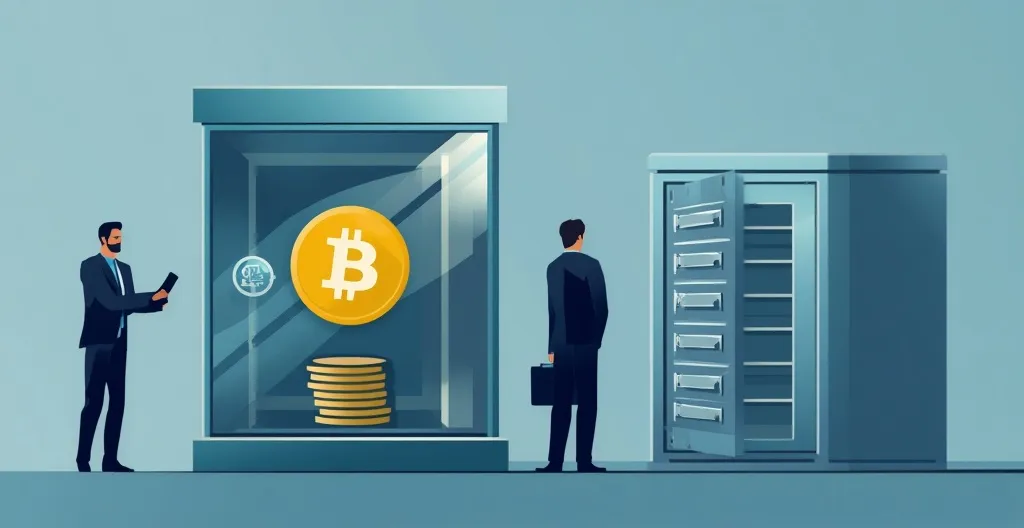
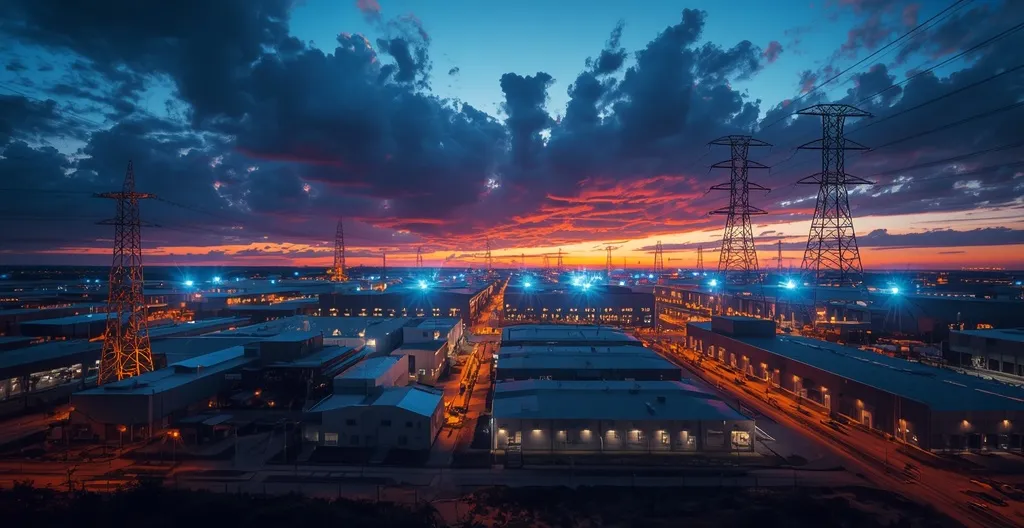
Riot Platforms is reportedly making a very expensive bet that its future is worth more as AI infrastructure than as a pure Bitcoin mine.
- Reported deal: $9.1 billion over 20 years
- Site: 191 megawatts at Rockdale, Texas
- Counterparty: Anthropic
- Shift: from Bitcoin mining income to AI compute revenue
According to CNBC, Riot Platforms strikes $9 Billion AI Compute Deal with Anthropic, with the agreement expected to generate $9.1 billion in revenue over its term. The reported arrangement would lease 191 megawatts at Riot’s Rockdale, Texas campus, with the first 96 MW targeted for December 2027 and the full build-out targeted for June 2028.
That is not a side quest. If the reporting is correct, Riot is saying its most valuable asset may no longer be just hash power for Bitcoin. It may be power itself, plus land, grid access, and data-center capacity. In 2026, or any year that matters, electricity is the scarce commodity. Chips are useless without it.
For readers who do not live inside data-center spreadsheets: megawatts measure power capacity. AI companies need enormous amounts of that power, along with cooling, networking, and reliable grid access. They are not just renting racks and servers. They are chasing the boring infrastructure that makes the flashy AI stack possible.
That is exactly why Bitcoin miners are suddenly interesting to AI firms. Miners already own power contracts, industrial land, and large electrical footprints. Those assets are hard to build from scratch, especially in places where getting new grid capacity can feel like a paperwork endurance test from hell.
CNBC says Riot expects to spend $2.1 billion to $2.3 billion to build the facility, excluding tenant fit-out. The reporting also notes that Riot’s Rockdale campus is being positioned as part of a broader contracted-revenue story, with Compass Point analyst Michael Donovan describing it as a “two-tenant campus carrying $9.8 billion of contracted data center revenue” when including an existing agreement with Advanced Micro Devices.
That does not mean Riot has stopped being a Bitcoin company. It means the market is increasingly rewarding Bitcoin miners that can turn their infrastructure into something more durable than block rewards alone. Mining revenue is brutal when BTC is weak, network difficulty rises, energy costs climb, or the post-halving economics get ugly. A long-term data-center lease can look a lot cleaner than trying to squeeze profits out of an increasingly competitive mining market.
Still, this is not a magic conversion. A Bitcoin mine is not automatically an AI data center with a fresh coat of paint and a motivational slogan. AI compute needs different networking, cooling, uptime guarantees, and hardware support. Converting industrial power capacity into something Anthropic can actually use is real work, not press-release cosplay.
CNBC frames Riot as “transitioning” from Bitcoin miner to AI infrastructure landlord, and that wording matters. The cleaner reading is diversification, not a full retreat from Bitcoin. Riot appears to be monetizing its assets in a second market, which is smart business if the economics hold. It is not the same thing as waving goodbye to mining and becoming a pure AI company overnight.
The market’s reaction showed both excitement and skepticism. CNBC reported that Riot’s shares initially jumped by more than 20% on the news before giving back nearly the entire gain. That makes sense. Wall Street loves contracted revenue until it remembers that multi-year infrastructure projects take capital, time, and a very long list of things that can go wrong.
The biggest question is not whether AI demand exists. It clearly does. The real question is whether the economics stay attractive after build costs, financing costs, and operating risk are baked in. Large data-center projects can become tidy cash machines, but they can also become expensive, delayed, overpromised headaches if execution slips or demand cools.
That is the devil’s-advocate case here. AI is hot right now, but no one should assume today’s appetite for compute will remain permanently insatiable. Power is valuable, but power alone does not guarantee profits. Megawatts are an asset. They are not a money printer.
Even so, the broader trend is hard to ignore. Bitcoin miners are increasingly being treated as infrastructure operators rather than just BTC producers. They own land, grid connections, and power-heavy sites that can be repurposed for high-performance computing and AI hosting. In a world where power access is scarce, that matters a lot.
Bitcoin still matters, and miners still matter. But this deal is a reminder that some of the best infrastructure in crypto may be worth more when it serves more than one use case. Riot may be learning that the market will pay for flexibility, not just hashrate. The companies that survive the next few years may be the ones that stop acting like one-product operations and start behaving like serious power-and-compute businesses. The rest may keep mining on nostalgia and hope, which is a rough business model unless hope comes with cheap electricity.
Key questions and takeaways
-
Is Riot Platforms leaving Bitcoin mining behind?
Not based on the reporting. This looks more like a major diversification move than a clean exit from mining. -
Why does Anthropic matter here?
Anthropic is the named AI counterparty, which makes this more than a vague “miner pivots to AI” headline. It suggests real demand for Riot’s power and campus capacity. -
What does 191 megawatts mean?
It is a measure of power capacity, and it is substantial. AI infrastructure lives and dies on access to reliable electricity, cooling, and grid support. -
Why are Bitcoin miners chasing AI deals?
Because mining can be cyclical and brutal, while long-term compute contracts can offer steadier revenue. If a miner already owns the power and the land, leasing that capacity can be smarter than only burning it on Bitcoin production. -
What is the biggest risk in this pivot?
Execution. Data centers are expensive to build, timelines slip, and the economics only work if the customer demand, financing, and operating performance all hold up. -
Does this prove AI demand will stay endless?
No. It proves that demand is strong enough for a long-term contract today. That is not the same as guaranteeing the boom lasts forever.
Further reading
For more on the money, the power, and the whiplash behind Riot’s AI pivot:
- Riot Platforms signs $9B AI compute deal with Anthropic
- Amodei Rejects Open Model Ban
- Anthropic, GIC, and Macquarie Team Up for AI Data Centers
- Riot Platforms Reports Second Quarter 2026 Financial
- Riot strikes $9B deal to provide Anthropic AI capacity
- Riot Platforms strikes deal with Anthropic as bitcoin miners
- Riot Platforms Sells $200M Bitcoin for AI Push: Genius or Gamble
- Riot Platforms Q1 Revenue Rises as Bitcoin Mining Slumps
- Riot Platforms Boosts Bitcoin Mining with $200M Coinbase