
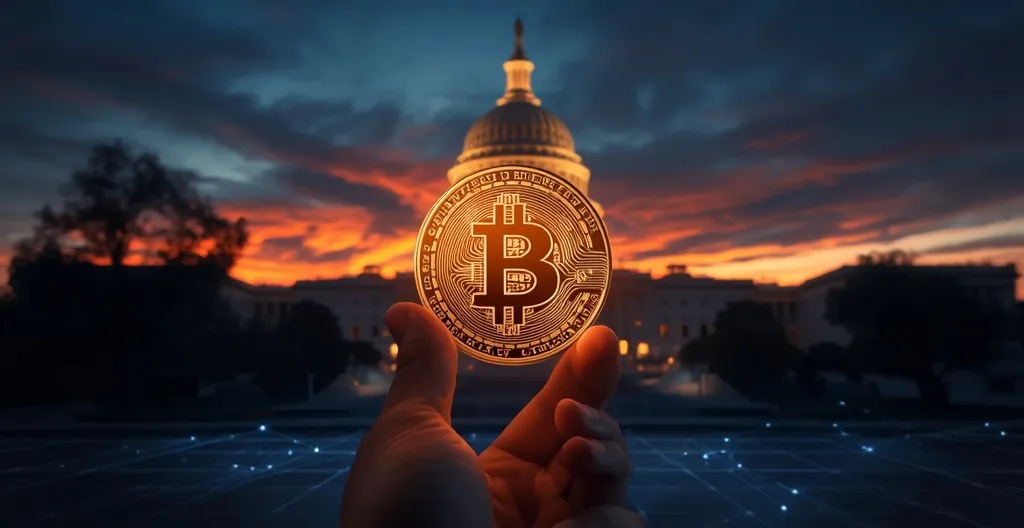
JD Vance emphasizes strategic importance of Bitcoin for US used a Bitcoin 2025 keynote to make a familiar Bitcoin case in blunt political language: Bitcoin is not just a trading asset, it is part of U.S. strength, freedom, and competitiveness.
- Bitcoin as strategy, framed as more than speculation.
- Debanking and inflation, used as arguments for self-sovereign money.
- Policy, not hype, the real test is whether the rhetoric turns into action.
According to a transcript of remarks delivered by Vice President JD Vance at the Bitcoin 2025 conference in Las Vegas on May 29, 2025, he described crypto as a hedge against “bad policymaking from Washington, ” “skyrocketing inflation, ” and debanking. He also cast digital assets as a “symbol and driver of personal liberty.”
That is a notable shift in tone for a U.S. political figure at that level. Washington spent years treating Bitcoin like a nuisance, a toy for speculators, or a convenient punching bag for anyone who wanted to sound serious about finance. Meanwhile, a lot of crypto promoters did their best impression of carnival barkers with a white paper. Neither side was exactly helping.
Vance’s message was more grounded than the usual slogan soup. He argued that the future of crypto in the U.S. should be decided by “the people, by you, not by unelected bureaucrats.” That line will resonate with Bitcoiners who see the network as a direct answer to financial gatekeeping, inflated money, and institutions that like power a little too much for their own good.
Debanking is the practice of banks or payment providers closing accounts or denying services. Sometimes that happens because of compliance risk. Sometimes it happens because someone or some industry is politically inconvenient. Either way, it is a reminder that access to money in a fully centralized system is never as neutral as people pretend.
That is where Bitcoin’s strategic value comes in. Bitcoin is scarce, censorship-resistant, and not dependent on a bank manager’s mood or a bureaucrat’s approval stamp. It is not magic, and it is not frictionless, but it does something traditional finance cannot: it lets people hold and move value without asking permission.
That distinction matters. Vance was not talking about meme coins, tokenized nonsense, or the usual parade of blockchain projects promising to “revolutionize finance” while mostly enriching insiders and producing glossy slide decks. His framing was closer to the original Bitcoin thesis: hard money, monetary sovereignty, and a system that does not bend so easily to political pressure.
The policy question is whether any of this becomes more than applause material at a conference full of true believers. Politicians love borrowing crypto’s anti-establishment energy when it is useful. Building real policy around it is the harder part.
That means practical questions, not just patriotic slogans. Will regulators improve banking access for lawful crypto businesses? Will tax rules become clearer? Will enforcement be more predictable instead of looking like it was written on a napkin during a panic meeting? Those are the kinds of changes that would show the remarks meant something.
There is also a geopolitical layer to this. Reuters reported that Vance said the U.S. should use Bitcoin as an advantage in rivalry with China. The supplied material does not include the full Reuters text, so that framing should be treated cautiously, but it fits a broader strategic logic: an open monetary network can be seen as a source of leverage in a world where payments, capital flows, and financial access are increasingly tools of statecraft.
That is the part many politicians still miss. Bitcoin is not just an asset on a chart. It is infrastructure. It can affect custody, energy markets, capital formation, cross-border payments, and the degree to which individuals can opt out of financial surveillance or pressure. Governments may dislike that because they cannot control it cleanly. But that is exactly why many people think it matters.
At the same time, the hype should stay on a short leash. Bitcoin is volatile. It is still misunderstood. It is still easy for users to lose funds through bad custody, bad opsec, or plain stupidity. And the broader crypto market remains stuffed with scams, nonsense tokens, and projects that confuse “decentralization” with “please buy my bag.”
So yes, Bitcoin has strategic relevance. But that does not mean every political nod suddenly equals serious policy. A speech at a Bitcoin conference is not the same thing as a durable framework for financial freedom. Washington has a long history of saying the right things in public and then doing something far less impressive once the cameras are off.
Still, the fact that a vice president is talking this way at all matters. Bitcoin is no longer easy to dismiss as fringe internet money. It has become part of a real debate about money, power, and who gets to control the rails underneath the economy.
That debate is not unique to the United States. The IMF’s take on the Stablecoin Paradox underscores a bigger contradiction in digital money: tools that promise efficiency and broader access can also deepen dependence on the same centralized rails they claim to bypass. Fancy new wrappers, same old control problem. Shocking, really.
The broader market is already feeling that contradiction in practice. As US crypto industry cheers 2025 wins, but party may fizzle, the near-term regulatory mood can look bullish while the longer-term consequences remain unresolved. Political wins are nice. Structural clarity is better. Without it, the champagne eventually goes flat.
And in the background, bigger political forces still loom. Trump’s Exit: How Bitcoin and Crypto Could Face Chaos in a political crisis is not a hypothetical worth ignoring, because crypto markets love pretending they are above politics while simultaneously reacting to every election, court filing, and government panic attack like a caffeinated chihuahua. If the political tail wags the crypto dog, that is a problem.
That is why some of the most concrete moves matter more than the speeches. Trump’s Bold Crypto Moves: Debanking Ban and 401(k) Access point to the sort of policy levers that can actually change adoption: access to banking, retirement accounts, and normal financial infrastructure. That is where the rubber meets the road, not in conference-stage applause lines.
Even within the Bitcoin world, there is a debate about how much ideological purity should matter versus how much practical freedom can be won inside the system. SEC’s Hester Peirce at Bitcoin 2025: Crypto Freedom Means captures that tension well: freedom is great, but so is owning your mistakes instead of demanding a bailout when your wallet setup looks like it was assembled by a raccoon.
At the same time, not every shiny promise deserves equal treatment. A lot of the market’s worst behavior comes from people who want the upside of decentralization without the responsibility. That is how scams thrive, and why the sector still needs a lot of hard-nosed skepticism alongside the optimism.
Key questions and takeaways
-
What did JD Vance say about Bitcoin?
He framed crypto as a hedge against bad Washington policy, inflation, and debanking, and described it as tied to personal liberty and U.S. competitiveness. -
Why does this matter for Bitcoin?
It places Bitcoin in a national strategy frame instead of a pure speculation frame. That is a big shift, because Bitcoin’s scarcity and censorship resistance are exactly what make it politically relevant. -
Did he call for a specific Bitcoin policy?
Not in the supplied material. The strongest signal is broad support for crypto and a pro-freedom framing, not a detailed legislative or reserve plan. -
What is debanking?
Debanking means being cut off from banking or payment services. It can happen for compliance reasons, but it can also become a blunt tool of political or institutional pressure. -
Does this mean the U.S. government is now pro-Bitcoin?
Not automatically. It means Bitcoin has enough political weight that senior officials are speaking about it as strategically useful, which is progress, but not proof of lasting policy change. -
Why does the China angle matter?
If Bitcoin is viewed as open financial infrastructure, it can also be viewed as a geopolitical advantage. That makes it relevant to policymakers thinking about competitiveness, resilience, and monetary power.
Bitcoin keeps forcing a simple question onto the table: do governments want money they can control, or money they have to respect? Vance’s remarks lean toward the second answer, and that alone is enough to make people in Washington a little uncomfortable.
Further reading
A couple of related angles worth keeping on the radar: