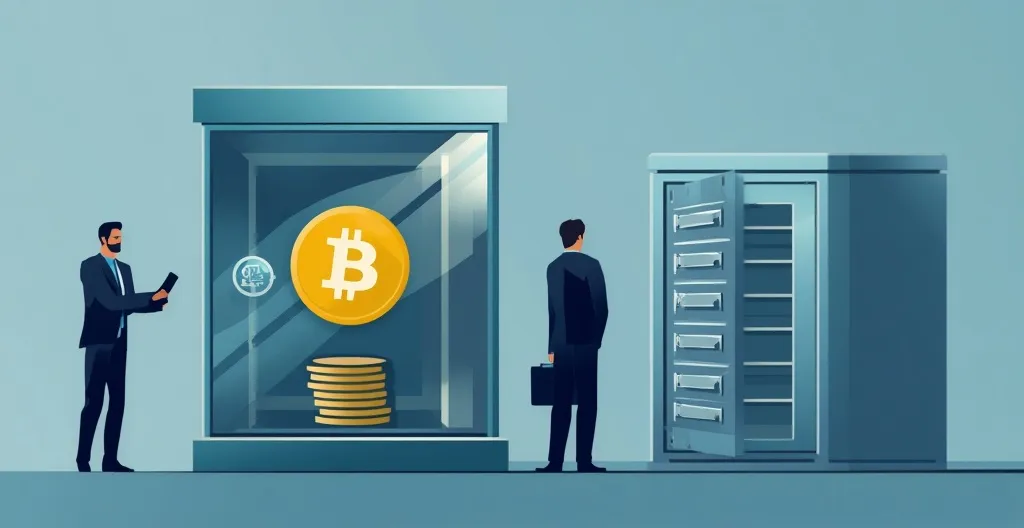

The headline says German banks are opening Bitcoin trading to 50 million savings customers, but that specific number is not verified in the material provided. What is clear is the broader direction: regulated Bitcoin access in Germany is expanding, and the banks-versus-Bitcoin wall is getting thinner by the month.
- “50 million savings customers” is unconfirmed
- Germany is expanding regulated crypto access
- BaFin allows crypto services only with authorization
- Bank branding does not equal deposit protection
That gap matters. There’s a big difference between a specific retail banking rollout and a broad, loosely written headline that may be compressing a more limited product launch into a much larger claim. “50 million” might be a customer-base estimate, a network figure, or just marketing-grade headline theater. Without named banks or a named banking group, it should be treated as unverified.
So what can be confirmed? Germany’s regulated financial world is moving further into crypto, and BaFin’s warnings about crypto volatility are keeping the activity inside a supervised box. That is not the same thing as unregulated crypto freedom. It is the financial system quietly pulling Bitcoin in through the front door after spending years pretending the side entrance didn’t exist.
What the headline is claiming
If taken literally, the headline would mean a major group of German banks is making Bitcoin trading available to around 50 million savings customers. That would be a serious retail distribution event.
It would matter because ordinary users rarely start with self-custody, hardware wallets, and exchange accounts. Most people start with what looks familiar. If Bitcoin shows up inside a banking app, the friction drops fast. The average saver may not care about crypto ideology; they care about whether they can buy without wrestling with seed phrases before breakfast.
But the available material does not confirm the service structure, does not name the banks involved, and does not show that 50 million customers are actually eligible. That is the central problem. A headline can sound like mass adoption while hiding the fact that the real development may be a narrower regulated product, a partner integration, or an institutional plumbing upgrade.
What is actually supported
The research does support a broader and more important point: regulated crypto services are expanding in Germany under BaFin oversight.
CoinDesk reported that BitGo Secures BaFin Approval for Regulated Crypto Trading. According to CoinDesk, that approval includes OTC trading and an electronic trading platform for thousands of digital assets and stablecoins.
OTC trading means over-the-counter trading, private deals arranged away from a public exchange order book. In plain English, it is a more controlled, often more institutional way to transact. That is useful plumbing, but it is not the same thing as a big retail bank suddenly flipping a switch for every saver in the country.
BaFin’s own guidance makes the regulatory side even clearer. The watchdog says cryptoasset services may only be provided if BaFin has granted authorization, a point reinforced in MiCAR in Practice: BaFin Issues Guidance on Crypto Services. That means regulated firms can operate, but only under specific conditions and oversight. This is not “anything goes” territory. It is permissioned finance with compliance strings attached, which is how the system usually digests disruptive assets once the initial panic has passed.
Why Germany matters
Germany is not a random market. It has a large banking footprint, a heavyweight regulatory voice in Europe, and a customer base big enough to move the needle when product access changes. If Bitcoin exposure becomes easier to buy through German banks or bank-linked platforms, that lowers the barrier for people who would never touch a standalone exchange.
That matters for adoption. It also matters for normalization. When Bitcoin is available inside familiar financial channels, more people start treating it less like a weird internet contraption and more like a legitimate asset they can choose to hold, trade, or ignore.
That said, mainstream access does not magically make Bitcoin low-risk. It just makes it easier to buy. Those are not the same thing, no matter how much marketing copy wishes otherwise.
Germany’s broader legal framework also matters here, and the legality of cryptocurrency by country or territory shows how differently governments can treat the same asset depending on local law. In Germany, the trend is not prohibition; it is regulated integration. Big difference.
The risks have not gone away
BaFin is blunt about the downside. The regulator says cryptoassets are highly speculative, volatile, and exposed to cyber risks. It specifically warns about phishing, exchange hacks, and loss of wallet keys.
That last part is where a lot of newcomers get flattened. A bank logo can create a false sense of security. People hear “bank” and assume the protections work like a savings deposit. They usually do not. Crypto custody is not deposit insurance, and losing access credentials can mean losing the asset itself.
A platform may be regulated. A provider may be licensed. None of that changes Bitcoin’s basic reality: if you mismanage custody, get phished, or trust the wrong counterparty, the damage can be real and fast. Bitcoin does not care how polished the app is.
There is a reason regulators keep hammering the risks. The dark side is not theoretical. Hacks happen. Users get tricked. Keys are lost. And unlike traditional deposits, there is no automatic state-backed bailout fairy to swoop in and restore everything because someone clicked the wrong link after two coffees and a bad headline.
Why the “50 million” figure is the weak link
The phrase “50 million savings customers” is the part that deserves the most skepticism. The material does not identify the institution, explain whether this refers to a savings bank network, a broad retail customer base, or a narrower customer segment, and does not confirm universal eligibility.
That ambiguity is not a minor detail. It is the difference between a real market shift and headline inflation. Numbers that large are often used to make a product launch sound bigger than it is. “A regulated crypto service is being rolled out” is accurate. “50 million customers are getting Bitcoin access” is a much larger claim, and the available information does not prove it.
Without a named bank or a clear product description, the customer count should be treated as unconfirmed. The headline may be pointing in the right general direction, but it is still doing some heavy lifting with a number that has not been properly pinned down.
The bigger trend is still real
Even with the verification problem, the broader trend is obvious: crypto is no longer being kept entirely outside the financial system. It is being integrated into regulated rails, one approval and compliance framework at a time.
For Bitcoin holders, that is a mixed bag. More access is good. More awareness is good. Less friction is good. But once banks enter the chat, they usually bring fees, custody trade-offs, and a strong instinct to wrap self-sovereign money in a nice, controlled product shell.
That does not make the trend bad. It makes it real. Adoption in the wild often looks messy, compromised, and less ideological than the hardcore crowd wants. Fine. Bitcoin does not need everyone to become a cypherpunk. It needs more people to be able to buy, hold, and understand what they are buying.
The danger is dumb adoption, buying the asset without understanding volatility, custody, or counterparty risk. That is how people end up with expensive lessons and a sour taste in their mouth. Bitcoin has never been shy about teaching humility.
Germany has also seen other banking and tax developments that point in the same direction, including DekaBank Secures Crypto Custody License, Bolstering and Germany Blocks Green Bid to End Bitcoin Tax Break, Keeps. Taken together, these moves show a country building a more mature crypto framework rather than slamming the door shut like some bureaucratic sitcom joke.
Key questions and takeaways
-
Is the “50 million savings customers” claim confirmed?
No. The available material does not verify that figure or identify the banks involved. It should be treated as unconfirmed. -
Is regulated Bitcoin access in Germany real?
Yes. BaFin allows crypto services only with authorization, and CoinDesk reported that BitGo Europe received BaFin approval to expand regulated crypto trading in Europe. -
Does bank access make Bitcoin safe?
No. BaFin warns that cryptoassets are speculative, volatile, and exposed to phishing, hacks, and wallet-key loss. Bank branding does not create deposit protection. -
Why does this matter for Bitcoin adoption?
Because traditional banking channels can make Bitcoin easier for ordinary users to access. Less friction usually means more participation. -
What remains unclear?
Which banks are involved, whether the access is direct or through a partner, how custody works, who is eligible, and what fees or restrictions apply.
The defensible reading is simple: German-regulated firms are expanding Bitcoin access, but the claim that German banks have opened trading to 50 million savings customers is not confirmed by the available material. The direction is real. The headline is still waiting for better proof.
Elsewhere, the institutional march continues. Deutsche Börse’s Clearstream has moved into bitcoin and ether custody services, and this Reuters report on Clearstream’s custody push underscores how the old guard is creeping deeper into digital assets. Even BitGo Europe GmbH now offers MiCAR compliant crypto, which is another sign that compliance is becoming the price of entry for serious players.
And if you want the blunt, longer-view takeaway: banks are not “discovering” Bitcoin out of the kindness of their hearts. They are responding to demand, regulatory clarity, and the uncomfortable reality that the asset they once mocked is not going away. German Banks Open Bitcoin Trading to 50 Million Savings may be a headline built on shaky numbers, but the underlying direction is hard to deny.
For readers comparing Germany’s pace with other markets, it is useful to watch developments like Charles Schwab Bitcoin Trading by 2026, South Korea because the global pattern is the same: legacy finance keeps inching toward crypto, one guarded step at a time.
That does not mean every bank rollout is revolutionary. Some are just cautious product extensions dressed up like history. Still, the broader trend is legitimate: more regulated access, more institutional plumbing, and more frictionless entry for ordinary people. The upside is adoption. The downside is that too many users will still confuse a regulated wrapper with actual self-custody. That’s where the hard lessons begin.