
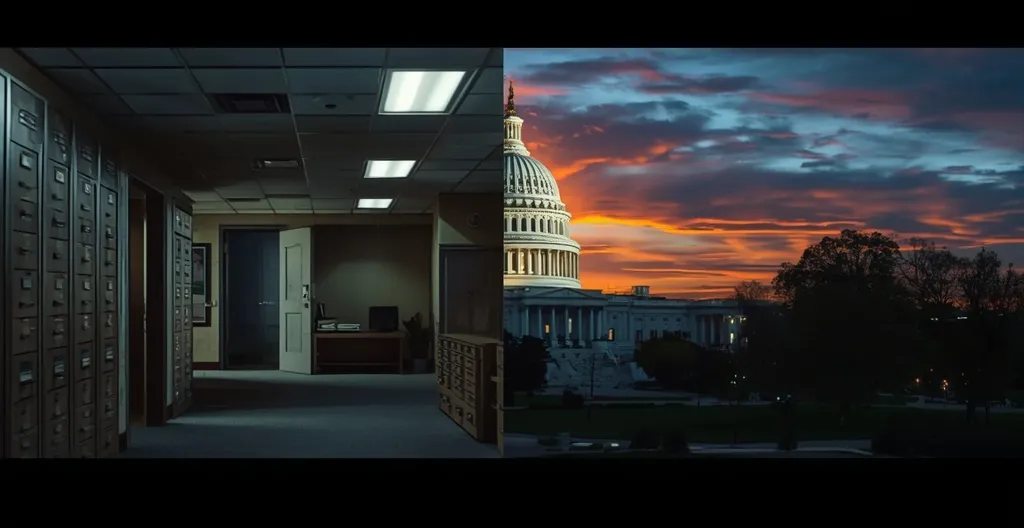
- DOGE’s mandate ended on July 4, 2026
- The program claimed $215 billion in savings
- Musk and Saylor revived Bitcoin chatter online
- The legal ending and the operational reality were not the same thing
The Department of Government Efficiency, created under President Donald Trump’s January 2025 executive order, was set up as a temporary initiative and scheduled to terminate on July 4, 2026, America’s 250th Independence Day celebration. Very Washington: a bureaucracy built to shrink bureaucracy, dressed up like a fireworks show.
The formal expiration matters, but so does the messier reality behind it. By the time the deadline arrived, Federal News Network had already reported that DOGE had effectively disbanded as a centralized entity months earlier, with DOGE.gov going offline and the public savings tracker no longer updating. In other words, the paperwork kept breathing after the operational pulse had already gotten weak.
Russ Vought, the Office of Management and Budget director, reportedly said no final report will be released. That leaves a familiar government problem: a big reform push, a pile of claims, and not much in the way of a clean, audited wrap-up. Accountability is apparently still waiting on the same bus as competent federal IT.
DOGE said it delivered about $215 billion in savings. That is a large number, but it needs context. Federal News Network noted that the figures remain disputed by experts, and even the most generous reading puts the total far below the $2 trillion target Musk had floated in late 2024. Big headline, smaller reality. Classic.
Using the government’s roughly $7 trillion annual budget as a rough benchmark, the claimed savings amount to only a sliver of federal spending. That does not make the effort meaningless, but it does make the victory lap look premature. Cutting waste is one thing. Pretending the machine was nearly fixed is another.
The White House order itself was broader than the branding suggested. It renamed the U.S. Digital Service as the United States DOGE Service and created a temporary organization focused on modernizing software, improving interoperability, strengthening data integrity, and giving agencies access to unclassified systems and records. That is less “burn it all down” and more “please make the federal computer stack stop wheezing.”
That distinction matters because DOGE ended up living in two different worlds at once: the legal one and the practical one. On paper, it had a clean expiration date. In practice, reporting suggested the central operation had already faded, while some administration officials continued to defend the work as necessary restructuring. Rep. Glenn Ivey, by contrast, said the program cut too many people too quickly and forced agencies to hire staff back. That is not efficiency. That is expensive improvisation with a patriotic logo on it.
The Bitcoin angle is mostly symbolic, but the symbolism is real. Elon Musk shared a patriotic video celebrating American history, originally posted by Marc Andreessen with the message “God bless America”, and Michael Saylor replied with a Bitcoin-flavored post using the ₿ symbol. No policy announcement followed. No corporate treasury move was announced. Still, crypto traders saw the exchange and immediately started drawing arrows on napkins like they were decoding the Federal Reserve.
Saylor’s reply fits his long-standing worldview. He has spent years framing Bitcoin as a treasury asset, a hedge against monetary debasement, and a reserve for institutions that do not want their purchasing power quietly eaten by inflation and bad policy. Musk, on the other hand, is a far less predictable signal. He can move markets with a joke, a meme, or a stray thought. Put them together and you get enough fuel for speculation, but not enough evidence for a serious thesis about policy or capital allocation.
There is a real historical thread here, though. In 2020, Saylor recommended that Tesla convert its balance sheet into Bitcoin. Tesla later bought $1.5 billion worth of BTC, one of the most visible corporate Bitcoin purchases ever. Then came the reversal: Tesla suspended Bitcoin payments in 2021 over environmental concerns. That history is why any Elon Musk, Michael Saylor Spark Bitcoin Buzz as Trumps DOGE interaction gets attention. It is not just internet theater; it is a reminder that corporate Bitcoin adoption has always lived between conviction, volatility, and backlash.
Bitcoin traded near $62, 584, up about 1% over the previous 24 hours. That kind of move does not prove much on its own. Crypto loves a patriotic montage, a billionaire reply, and any excuse to call it a macro signal. Sometimes the market is reading the room. Sometimes it is just being dramatic in a more expensive language.
The bigger lesson is that slogans are easy and savings are hard. DOGE was sold as a clean efficiency crusade, but the results were muddier: a disputed savings figure, a program that had already lost momentum before its formal end, and an unresolved debate over whether the cuts actually improved government performance or just created more churn. That is the part nobody likes to put in the press release.
Bitcoin does still stand apart as the strongest monetary protest vote in the room. It is a hard asset, a check on debasement, and a tool for people who do not trust centralized money printers, for good reason. But it is not a magic wand for public-sector reform, and a social-media exchange between two high-profile Bitcoin advocates does not turn it into one. The symbolism is real. The policy significance is not. At least not yet.
Key questions and takeaways
-
What happened to DOGE?
The temporary Department of Government Efficiency reached its scheduled end date on July 4, 2026. Federal News Network also reported that it had already effectively disbanded as a centralized entity months earlier. -
How much did DOGE say it saved?
DOGE claimed about $215 billion in savings. That figure remains disputed by experts and falls well short of Musk’s earlier $2 trillion goal. -
Was DOGE actually a success?
Not cleanly. The program’s supporters point to claimed savings and restructuring efforts, but critics argue it cut too aggressively, forced rehiring, and delivered less than advertised. -
Why did Bitcoin get pulled into this?
Musk’s patriotic post and Saylor’s Bitcoin-symbol reply gave traders a fresh excuse to read political symbolism as crypto-friendly sentiment. That makes for a good meme, but it is not the same as an official endorsement or policy shift. -
Did Musk and Saylor signal anything official?
No. The exchange was symbolic, not a formal announcement. Any claim that it marks a new fiscal or corporate direction is speculation. -
What does this mean for Bitcoin?
Mostly more attention. Bitcoin remains the clearest asset for people who want a hedge against monetary abuse, but it does not automatically become the answer to government inefficiency just because two famous BTC voices posted online.
Further reading
For the bureaucratic aftermath, the Bitcoin symbolism, and the official paper trail, these sources help fill in the gaps.
- DOGE's Final Days: Impact and Controversy in Federal Oversight
- Bitcoin Evangelist Michael Saylor Declares 2021 as the Year of Institutional BTC
- Congressional Research Service overview of the Department of Government Efficiency (DOGE) Executive Action
- Elon Musk’s DOGE Saves $55B: Bitcoin Investment or Citizen Dividend?
- Elon Musk’s DOGE Role and Conspiracy Claims Stir Controversy on Joe Rogan
- Elon Musk’s Bold Economic Forecast: Bitcoin, XRP, Dogecoin, and DeepSnitch AI