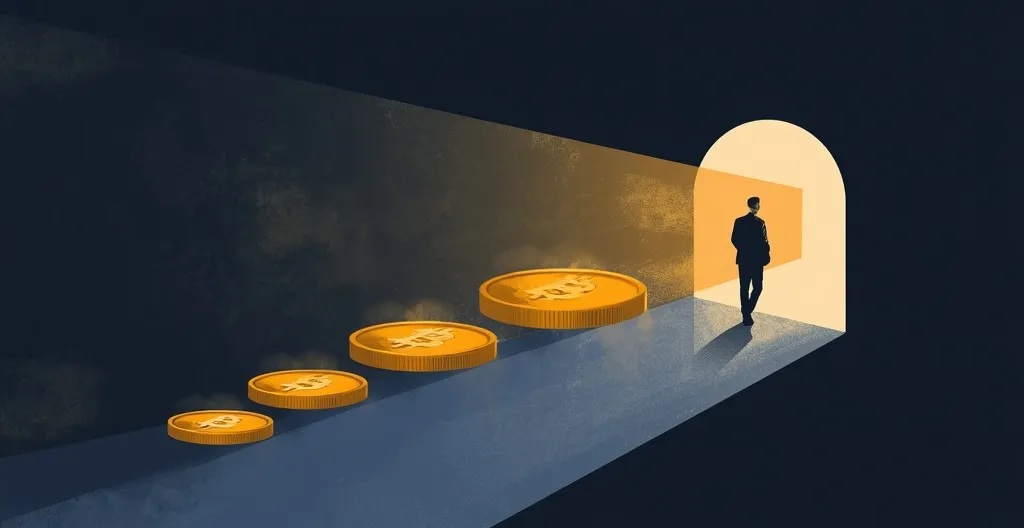
Bitcoin miners are getting squeezed hard. Revenue is under pressure, costs keep creeping up, and the AI/HPC pivot that once lit up the market is starting to look less like a magic exit ramp and more like a capital-heavy reality check.
- Mining economics are getting uglier as costs rise and BTC stays range-bound.
- AI/HPC announcements are still common, but investor reactions are getting less enthusiastic.
- Texas is tightening scrutiny on power-hungry data center projects.
- Public miners are splitting paths between pure mining, treasury management, and infrastructure conversion.
Second-quarter 2026 is a brutal snapshot for block reward miners. Bitcoin mining still matters, still secures the network, and still rewards the companies that can run lean. But the economics are looking thinner, and the old “just add AI” pitch is no longer enough to make investors cheer like it’s 2024 again.
The average all-in cost of mining a single BTC is said to exceed the token’s fiat value by about $6, 000. Whether that figure applies to every miner is another matter entirely. Mining costs vary widely depending on electricity contracts, hardware efficiency, financing, and how depreciation is accounted for. But the direction is clear enough. Margins are getting pinched.
BTC has also been trading in roughly a $60, 000 to $65, 000 range for about two months, while the next Bitcoin network difficulty adjustment is scheduled for August 8. That adjustment is projected to raise difficulty by around 1%, which would make finding a block a little harder and squeeze margins a little more. Bitcoin mining machine profits, as always, do not care about your pitch deck.
And the pitch decks are getting louder.
The AI/HPC pivot is real, but the hype tax is rising
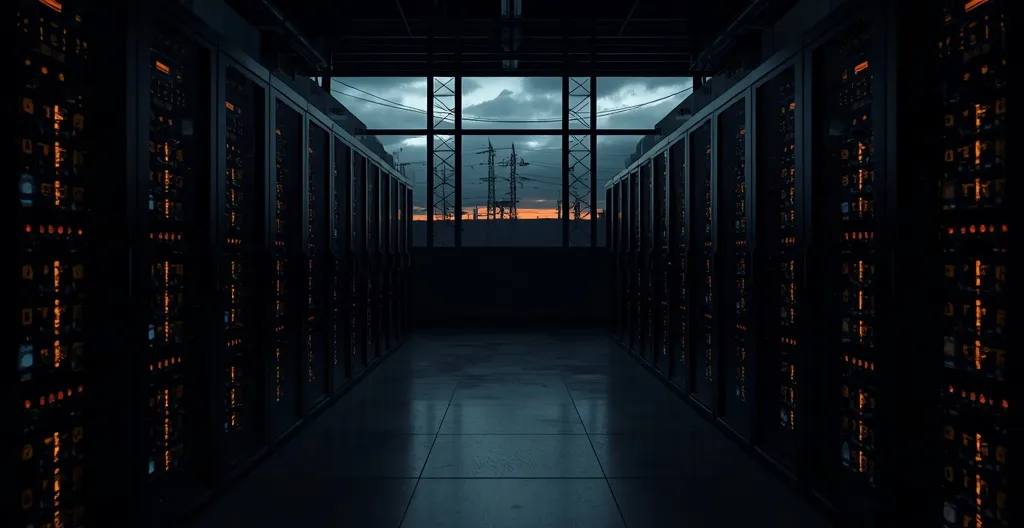
Bitcoin miners have been racing toward artificial intelligence and high-performance computing hosting as a way out of the mining squeeze. The logic is simple: if you already control land, power access, cooling, and industrial infrastructure, maybe you can repurpose that footprint into a steadier business with long-term contracts.
That part is not nonsense. The part that is nonsense is pretending every mining site becomes an AI campus just because someone slapped “HPC” on a press release.
The Energy Mag tracked 25 AI/HPC infrastructure announcements between June 2024 and August 4, 2026. Early announcements were rewarded with share-price spikes as high as 32.5%, but later ones fell to 6.3%. Median moves also dropped, from 14.8% in the first eight announcements to 7.3% in the last eight.
That suggests the market is still willing to pay attention, but it is no longer throwing confetti at every company that says “we’re entering AI.” Investors have heard the sermon. Now they want to see the contract, the power, the capex, and the tenant.
Bitcoin miners pivoting to AI data centers is not just a meme; it is becoming a full-blown business thesis. The harder question is whether the economics actually work once the press releases stop and the invoices start landing.
Texas is adding friction, and that matters
For miners and data-center operators, Texas has long been one of the juiciest battlegrounds in the U.S. Cheap power, a giant grid, and a pro-industry streak made it a natural home for large-scale compute loads. That is getting less simple.
Governor Greg Abbott announced a “comprehensive verification and audit” of all data centers advancing through ERCOT’s interconnection process. The governor’s office said the PUCT and ERCOT must complete the audit before any data center project moves forward, a move detailed in the Governor Abbott orders audit of data centers before grid.
“A comprehensive verification and audit of all data centers advancing through ERCOT’s interconnection process. The PUCT and ERCOT must complete this audit before any data center project moves forward.”
ERCOT is dealing with roughly 1, 800 requests to draw over 474 gigawatts from the grid, and around 90% of those requests were made by data centers. Abbott’s June directive also pushed questions around self-supplied power, water use, and noise mitigation.
That is not a small policy tweak. It is a signal that Texas is no longer interested in being a blank check for every power-hungry project that shows up with a PowerPoint and a prayer. For miners trying to turn old ASIC farms into AI sites, the grid gatekeepers are now part of the business plan.
Canaan: treasury support, buybacks, and a battered stock
Canaan Inc. is trying to manage the squeeze with a mix of treasury strategy and shareholder support. Last month, the company was granted a 180-day extension to regain Nasdaq compliance, and shares were trading around $0.20. At the end of June, Canaan held 1, 867 BTC in treasury, worth around $130 million at the time.
The company authorized a share buyback program last December for up to $30 million in the 12 months ending December 12, 2026. In June, CEO and Chairman Nangeng Zhang and CFO Jin “James” Cheng bought a combined total of more than one million Canaan shares.
Zhang said the move “reflects our disciplined approach to capital allocation and our commitment to creating long-term shareholder value.” He also said Canaan “does not fully reflect the value of our digital asset holdings, cash position, and the strength of our underlying business. Using a portion of our digital asset treasury to repurchase shares therefore, represents a compelling allocation of capital and demonstrates our confidence in the Company’s long-term prospects.”
That is the classic management response when the market thinks your stock is junk and you think the market is wrong. Sometimes it is wrong. Sometimes the company is just buying time with financial engineering and hoping the next quarter looks less embarrassing.
American Bitcoin: mining hard, talking harder
American Bitcoin Corp., spun off from Hut 8 in March 2025, posted second-quarter revenue of $67 million, up 8% from Q1. Net loss narrowed to $57.1 million from $81.8 million, while its BTC treasury write-down fell to $71.2 million from $117.2 million in the prior quarter, according to TeraWulf Inc. financial results for the three and six.
The company mined 932 BTC in Q2, up 115 from Q1 and a new company record. Its treasury increased by 981 tokens to 8, 002 tokens at the end of the quarter, including about $4 million in “strategic at-market purchases” of BTC. Since quarter-end, that treasury has moved above 8, 300 tokens.
ABTC is ranked 16th on the Bitcoin Treasuries list of public companies and, after a reverse stock split on July 2, pushed its share price back above Nasdaq’s $1 minimum. That is usually less a victory lap than a compliance maneuver.
CEO Mike Ho said Drumheller, Alberta is “adding roughly three EH/s of next-generation capacity.” The company currently ranks sixth among mining operators with operating capacity of 25 EH/s.
Chief strategy officer Eric Trump took a shot at digital asset treasury firms, saying DAT companies have to go out and buy Bitcoin “at fair market price, ” while ABTC is “mining for roughly 50¢ on the dollar.” He added that many DAT firms are “dead in the water” and that “the cost of being public is eating them alive.”
There is some truth in that. Mining at scale can be cheaper than buying BTC outright. But the other side of the coin is that miners live and die by power costs, hardware cycles, and network difficulty. There is no free lunch in Bitcoin. There is only a different bill.
On July 31, ABTC appointed Paul Sacks interim CFO effective August 4. Matthew Prusak left on July 30 to join Giga Energy. In a business this exposed to capital markets, personnel changes at the top usually mean the next strategic fight is already underway.
Cipher: the exit from mining is getting serious
Cipher announced a “Bitcoin Mining Exit Strategy” in February, and its second-quarter numbers explain why the company is leaning that way. Mining revenue fell more than 41% year on year to $24.8 million, while costs rose 16.4% to $103.4 million. Operating loss came in at $78.5 million, and net losses quintupled year on year and more than doubled quarter on quarter to $267.5 million, a grim setup that mirrors the pressure seen in mining losses rising faster than revenue.
Odessa mined 346 BTC in Q2 and has a hashrate of 11.6 EH/s. The first data center launch came this month, two months ahead of schedule, and “rent has commenced” at the Black Pearl site in Wink, Texas. Cipher also has an option called Apollo outside San Antonio that could add up to 900 MW.
CEO Tyler Page said, “we don’t anticipate additional capital investment in this part of the business as we continue prioritizing HPC, and we are encouraged by the level of [tenant] interest we’re seeing in conversion of Odessa to an HPC site.” He added, “Long answer is, it actually doesn’t change anything about how bullish I am for Cipher.”
That last line is doing a lot of work. It is easy to be bullish on a transformation when the future version of the business is the part people want to talk about. It is harder when the mining side is still chewing through cash and the HPC side still has to prove it can actually throw off durable revenue.
Bitcoin mining's AI pivot may be the cleanest narrative miners have left, but a narrative is not a revenue model. Investors have learned that the hard way before.
TeraWulf: mining is fading, leases are paying
TeraWulf may be the clearest example of how fast this business is changing. The company expects to be fully done with mining operations by next year. In the latest quarter, mining revenue fell nearly three-quarters year on year to $12.8 million, while HPC lease revenue jumped from zero in the comparable quarter to $31.9 million.
That means HPC lease revenue accounted for about 71% of total revenue. Costs and expenses tripled to $185.2 million, operating loss hit $140.4 million, and net loss came in at $929.7 million.
Some of that loss reflects non-cash accounting noise, including accelerated depreciation tied to shortening the useful lives of ASIC mining rigs. About $12 million was linked to that adjustment.
Patrick Fleury said the quarter was “another meaningful step in the transformation of our financial profile.”
He is not wrong, but transformation is one of those words that can mean “we built a better business” or “we changed the labels and hope the market doesn’t notice the burn rate.” Time will tell which one this becomes.
CleanSpark: still mining, but the floor is shifting
CleanSpark signed its first AI data center client last week, though the customer has not been identified. For now, mining still does most of the heavy lifting. Mining revenue for fiscal Q3 ending June 30 was $138 million, slightly above Q2’s $136.4 million, but below the $199 million reported in Q3 2025.
Net loss came in at just under $240 million, compared with $378 million in the prior quarter. About $133 million of the Q3 loss came from BTC treasury devaluation, while the Q2 markdown was $263 million.
In July, the company mined 586 BTC, down from 614 in June. Average operating hashrate fell to 38.6 EH/s from 42.6 EH/s in June and 46.2 EH/s in May. CleanSpark produced 4, 310 BTC in the first seven months of the current fiscal year, down from 4, 639 in the same stretch of fiscal 2025. It sold 229 BTC in July and ended with 13, 391 tokens in treasury.
CEO Matthew Schultz said mining gives CleanSpark “the ability to bring a paying load online faster than a traditional data center developer, ” and “gives us a set of levers that very few companies in this sector can match.” He also said, “we are never forced sellers of anything … Mining funds the platform, the balance sheet protects our shareholders, and the AI business monetizes the portfolio for decades to come.”
That is a polished version of the miner-as-platform thesis. It may prove right. It may also prove that being able to talk like a data-center operator is not the same as being one at scale.
MARA: still huge, still expensive, still adapting
MARA remains one of the biggest names in Bitcoin mining, but even giants are feeling the pressure. Bitdeer overtook MARA in hashrate, and MARA’s Q2 mining revenue came in at $174.9 million. That was only about $300, 000 higher than Q1, though Q2 2025 was still a 25% stronger comparison point.
Operating loss improved to $521 million from $1.06 billion in Q1, but net losses still reached $611.3 million. MARA’s treasury held 35, 577 tokens at the end of Q2, down from a peak of 53, 250 last year.
Shares closed Thursday down 5.25% at $10.65. They are up 18.6% year to date, but were trading closer to $20 about nine months ago.
Fred Thiel said mining is “an important part of MARA, not because it defines the limits of our future, but because it continues to strengthen the broader platform.” He added that mining gave the company “the foundation, strategic power assets, experience operating large scale computers, and the capital allocation discipline we use today, ” and that “it still plays three important roles” for MARA.
That is the right framing for a company trying to evolve without pretending its core business never mattered. Mining may no longer be the whole story, but for the biggest operators it still funds the machinery, the balance sheet, and the optionality.
What the quarter says about the business from here
The pattern is hard to miss. Mining revenue is under strain, treasury markdowns are still distorting reported results, and the AI/HPC pivot has become the default escape hatch for public miners that want to tell a better growth story.
But not every pivot is equal. Some operators have real sites, real power access, and a realistic path to conversion. Others have a ticker, a press release, and a lot of hope. The market is starting to separate those groups, slowly but visibly.
Texas makes that separation even sharper. If ERCOT and the PUCT are going to scrutinize interconnections, self-supplied power, water use, and local impacts, then the easy path to AI-data-center expansion gets narrower. The operators with real infrastructure will keep moving. The rest will keep talking.
Bitcoin mining is not going away. The 3.125 BTC block reward still exists, network difficulty still adjusts, and the system still needs miners. But for public miners, the old model is being squeezed into something more complicated: part mining business, part power business, part data-center business, part treasury management machine.
Bitcoin miners pivoting to AI data centers as mining stocks outpace BTC has become the trade of the moment, but that kind of market outperformance can vanish fast when execution slips. The companies that survive this phase will be the ones that can secure power, control costs, and build revenue streams that are real, not decorative. Everything else is just expensive cosplay.
Key takeaways
-
Why are miners under so much pressure right now?
BTC has been range-bound while costs, depreciation, and network difficulty keep rising. That leaves much less room for error, especially for public miners carrying heavy infrastructure bills. -
Why are so many miners chasing AI and HPC?
AI/HPC hosting can offer steadier, contract-based revenue than mining alone. The catch is that conversion is expensive, slow, and easy to overhype. -
Is the market still rewarding AI pivot announcements?
Less than before. Tracking data from The Energy Mag shows post-announcement share spikes have fallen sharply, which suggests investors are getting tired of buzzwords and want actual contracts. -
What does Texas’ audit mean for data centers?
It means more scrutiny before projects get connected to ERCOT’s grid. That could slow expansion, raise compliance burdens, and favor operators that already have power and infrastructure lined up. -
Are public miners abandoning Bitcoin mining?
Not entirely. Some are still focused on hashpower, while others are turning into hybrid infrastructure companies. The sector is splitting into different business models, and not all of them will survive.
There’s a reason miners keep talking about AI. It is partly strategy, partly desperation, and partly the blunt realization that the old playbook no longer prints the way it used to. In this market, real power, real contracts, and real discipline matter. Everything else is noise.
Trump China trip puts Bitcoin miners and ASIC supply chains back in focus too, because hardware, geopolitics, and supply chains are still very much part of the mining game.
Meanwhile, the big picture is that miners with scale, balance sheet flexibility, and optionality are trying to survive a market where raw hashpower is no longer enough on its own. Those with stronger execution may yet turn mining campuses into something durable. Those without it will keep discovering that “pivot” is just a nicer word for panic when the math stops working.
That pressure is why operators are also watching execution risk so closely. In a sector where one bad buildout can torch years of gains, the gap between ambition and deliverable infrastructure is brutal, and Bitcoin miners face a $50B AI funding gap as execution pressure mounts is not some abstract warning, it is the bill coming due.
Remember: respond with only the finished article text.