
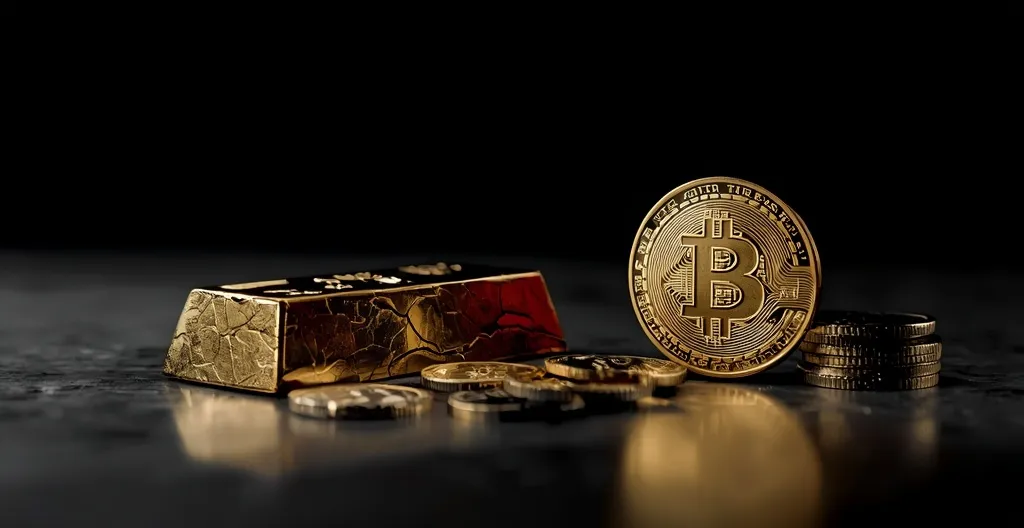
Gold and silver just got a reality check, and Bitcoin’s “digital gold” thesis is taking some collateral damage from the same macro mood swing. Safe haven does not mean immune. The market just reminded everyone of that with a nice little slap.
- Gold and silver can sell off even when investors still call them “safe haven” assets.
- Bitcoin’s “digital gold” case is really a question of scarcity, portability, and staying power under stress.
- Price moves are only half the test; exchange outages, custody risk, and market plumbing matter too.
- Calling Bitcoin a perfect gold replacement is sloppy. Dismissing it as a joke is just as lazy.
On its face, the comparison is simple. When precious metals fall, people start asking whether Bitcoin deserves its gold-like nickname or whether that label was always more marketing than money. Fair question. It just needs some grounding. Gold and silver are not magical assets that go up in a straight line because they have history and a shiny reputation. They can get crushed when real yields, dollar strength, investor positioning, or liquidity conditions turn against them.
Silver is especially messy. It is not just a monetary metal, it is also an industrial input. That means factory demand can drag it around just as much as hedging demand. According to the Silver Institute’s latest market outlook, global silver demand is expected to fall 4% year-over-year to 1.12 billion ounces in 2025. Industrial demand is forecast to decline 2%, and bar and coin demand is expected to drop 4% to a seven-year low of 182 million ounces. At the same time, mined supply is expected to stay flat at 813 million ounces, while the market heads toward a fifth straight deficit, estimated at 95 million ounces.
That sounds contradictory until you remember how markets actually work. A market can stay in supply deficit and still sell off if investors are unloading positions, cutting exposure, or moving into cash and other assets. Tight supply does not guarantee a higher price tomorrow. Sometimes the market cares more about positioning than fundamentals for a while. Annoying? Yes. New? Not even close.
This is where Bitcoin gets pulled into the same conversation. The “digital gold” thesis is easy enough to explain. Bitcoin is scarce, portable, divisible, and capped at 21 million coins. That makes it attractive as a store of value in a world that keeps debasing fiat currencies and calling it “policy.” Bitcoin does not need vaults, customs declarations, or a forklift to move across borders. That is a real advantage, not a marketing slogan with a hoodie on.
But the label is not a law of physics. It is a narrative. Bitcoin can behave like digital gold in one market regime, a speculative risk asset in another, and a liquidity sponge when leverage unwinds and traders start stampeding for the exits. Anyone pretending it acts exactly like gold in every environment is either shilling or asleep at the wheel.
The bigger question is what kind of stress test Bitcoin is actually facing. It is not just about whether the price drops alongside metals. It is about whether Bitcoin preserves purchasing power over time, whether it stays liquid when markets get ugly, and whether people still treat it as a credible savings asset after the dust settles. That is a tougher standard than “did it pump this week?” and a lot more useful too.
There is also a critical distinction that gets flattened too often: Bitcoin the protocol is not the same thing as the exchanges and platforms people use to trade it. Bitcoin can keep producing blocks while a centralized exchange stumbles, freezes, or gets knocked sideways by technical issues or attacks. Reuters has reported on that weakness before, noting crypto exchange outages at Gemini and BitMEX during periods of market stress, along with the broader lack of circuit breakers in crypto markets that traditional stock exchanges rely on to slow panic and keep everything from turning into a very expensive fire drill.
That difference matters. The network can be resilient while the trading layer is a clown show. Those are not the same thing, and pretending they are is how people end up confusing Bitcoin with the weakest centralized intermediary in the room. The protocol may keep ticking. The exchange may, to put it politely, faceplant.
For Bitcoin bulls, the metals sell-off is a reminder that age does not equal invincibility. Gold has monetary credibility because humans have used it as money for thousands of years. Silver has a long monetary history and real industrial utility. Fine. But neither one is immune to macro pressure, and neither one gets to sit above market reality just because it has been around longer than your nation-state or your brokerage app.
For the skeptics, the counterargument still holds: Bitcoin remains more reflexive than gold most of the time. It trades with more leverage, more emotion, and more narrative dependence. That does not make it worthless. It means Bitcoin is still proving whether it can graduate from speculative asset to durable monetary asset. That process takes time, and yes, it involves nasty drawdowns that make people question their life choices.
The cleanest way to frame it is this: gold is the old reserve asset, silver is the hybrid of money and industry, and Bitcoin is the new scarce monetary network. Each one has strengths. Each one has weaknesses. None of them is a magic shield against bad macro conditions, and none of them deserves blind worship from people who think charts are a substitute for thinking.
So no, a metals sell-off does not “kill” Bitcoin’s digital gold thesis. But it does force a more honest version of the debate. Bitcoin is not a perfect replacement for gold, and gold is not a perfect refuge from volatility. The real test is whether Bitcoin can keep functioning as long-term savings money while surviving the same kind of stress that shakes older assets. That question is still open, and the market keeps handing out new exams.
Key questions and takeaways
-
Does a gold or silver sell-off disprove Bitcoin’s digital-gold thesis?
No. It does remind investors that safe-haven status is conditional, not absolute. A sell-off in metals can coexist with Bitcoin’s scarcity story, but it also shows that no asset gets a free pass when macro stress hits. -
Why is silver especially vulnerable?
Silver is both a monetary metal and an industrial commodity. If industrial demand softens and investor demand cools at the same time, silver can get hit from multiple sides even when supply remains tight. -
What does “stress test” mean here?
It means asking whether Bitcoin can hold value, stay liquid, and remain credible when markets are under pressure. The test is not just price action; it also includes market structure, custody, and trading reliability. -
Is Bitcoin the same thing as the exchanges that trade it?
No. Bitcoin the protocol can keep running even if a centralized exchange goes down. That distinction matters because network resilience and exchange reliability are two very different things. -
What is the fairest view of Bitcoin right now?
Bitcoin is neither perfect digital gold nor a useless casino token. It is a scarce monetary asset with real strengths, real risks, and a long way to go before anyone should pretend its role in savings is fully settled.
The bottom line is simple: gold and silver are not sacred relics, and Bitcoin is not a magic escape hatch. All three can be tested. Bitcoin just happens to be the one still proving, in public and in real time, whether it can serve as long-term money rather than only a volatile trade.
Further reading
A few related pieces worth keeping in view as the metals-vs-Bitcoin debate keeps getting dragged through the macro mud.
- Gold and Silver Sell-Off: Bitcoin’s Digital-Gold Trade Faces a Fresh Test
- Silver Demand and Supply Trends for 2025: A Forecast
- Understanding Cookies and Privacy Choices on Our Website
- Silver Supply & Demand
- Bitcoin Set for First Yearly Loss Since 2022 as Macro Trends Weigh on Crypto
- Gold and Silver Hit 2026 Records: Bitcoin Faces Wake-Up Call
- Bitcoin Crashes 30% as Gold, Silver Soar: Is This the Calm Before a Crypto Surge?
- Bitcoin Crashes to $87K in 2025 as Gold Surges 70%: Is Digital Gold Dead?