
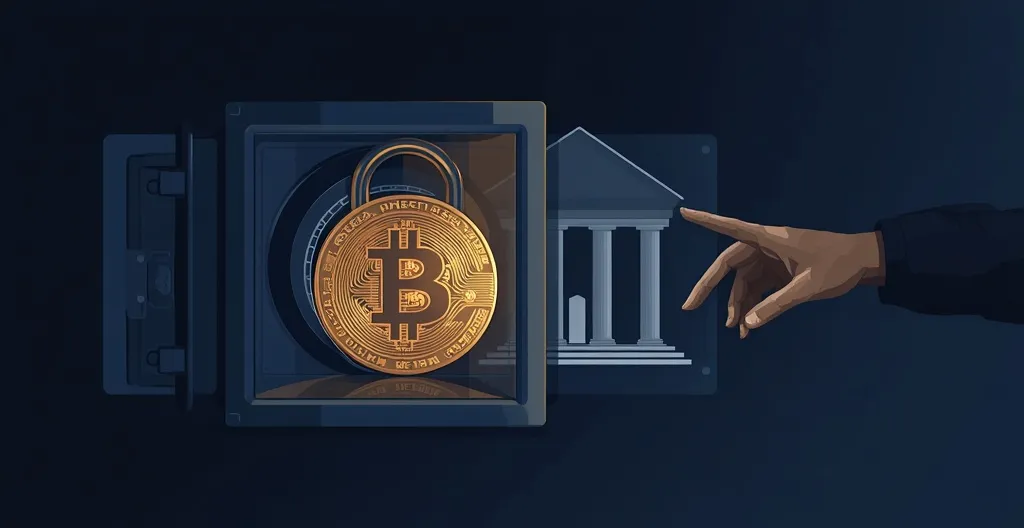
Bitcoin-backed loans can be useful, but only if the collateral is held by a qualified custodian and never rehypothecated. Strip away the marketing gloss and that is the real risk control: who holds the BTC, whether it can be reused, and what happens when the market turns ugly.
- Qualified custody matters: it separates the lender from the keys.
- No rehypothecation matters too: pledged BTC should not be recycled into another bet.
- Borrowing still has risk: interest, margin calls, and liquidation are part of the deal.
- Centralized lending has scars: Celsius, BlockFi, and Genesis showed what opacity can do.
That is the case Himanshu Sahay, co-founder and chief technology officer of Arch Lending: Crypto-Backed Loans, makes for Bitcoin-backed borrowing. In his view, these loans only make sense when custody is cleanly separated from lending and the collateral is not reused elsewhere. Otherwise, the setup starts looking less like finance and more like a confidence trick with a compliance department.
For long-term Bitcoin holders, the appeal is obvious. Borrowing against BTC can provide liquidity without forcing a sale, which matters for investors who want to keep their exposure intact. For many U.S. investors, it can also delay the need to sell an appreciated asset and therefore defer a taxable event, depending on the loan structure and their broader tax situation.
That is the upside. The downside is not subtle.
Sahay says borrowing is not risk-free, and he is right to say it out loud instead of wrapping it in velvet. Bitcoin-backed loans come with interest costs, margin-call risk, and the possibility of liquidation if the value of the collateral falls too far.
LTV, or loan-to-value ratio, is the basic guardrail. It compares the loan balance to the value of the Bitcoin pledged as collateral. If the loan grows too large relative to the collateral value, the borrower may need to add more BTC or repay part of the loan. If they do not, the lender can sell some or all of the collateral.
As a simple example, a $20, 000 loan against $50, 000 of Bitcoin would be a 40% LTV. If BTC falls hard enough, that ratio rises fast. Bitcoin does not care about your long-term thesis. The math is merciless.
Artem Ponomarev, founder and CEO of XPlace, made a similar case in an Aug. 18 interview, calling for conservative LTV limits, continuous collateral monitoring, and clear liquidation terms. That is the boring part of lending that actually matters. The flashy part is the part that usually ends in tears.
According to Sahay, Arch Lending uses Self-custody wallet for institutions as the collateral custodian. Anchorage is a federally chartered U.S. bank and qualified custodian, and Arch says it does not hold the private keys itself. Arch also says borrower collateral is not rehypothecated.
That setup matters because custody is one of the biggest risk points in Bitcoin-backed lending. A regulated custodian is not a magic shield, but it is a better framework than vague promises and pooled control. It usually means more defined legal and operational standards, clearer segregation of assets, and a more legible answer to the question: where is the Bitcoin actually sitting?
Anchorage’s regulatory history is also worth keeping in view. The Office of the Comptroller of the Currency granted Anchorage Digital Bank a national trust bank charter in January 2021, allowing it to perform fiduciary, agency, and custodial activities under capital, liquidity, and risk-management requirements. But in April 2022, the OCC issued a consent order after finding Anchorage had failed to adopt and implement a compliance program that met Bank Secrecy Act and anti-money-laundering requirements.
That is the important nuance: regulated does not mean perfect. It means there are standards, oversight, and consequences when those standards are missed. Better than the Wild West, yes. A force field against bad behavior, no.
The other key term here is rehypothecation. That means a lender or custodian reuses pledged collateral in another loan, trade, or investment. In old-school finance, that can create layers of hidden leverage. In crypto, it can turn one borrower’s “secured” loan into part of a much bigger mess.
Sahay’s point is simple: if the collateral is not rehypothecated, it cannot be deployed somewhere else while it is securing the original loan. That reduces the risk that a borrower’s BTC gets tangled up in a downstream default, withdrawal freeze, or other counterparty failure. If the collateral is being passed around behind the scenes, the borrower may not be taking just one risk. They may be taking several.
“For long-term Bitcoin holders, borrowing can provide liquidity without requiring them to sell their position, ”, Himanshu Sahay
“Borrowing is not risk-free. It comes with interest costs, margin-call risk, and potential liquidation if the value of the collateral falls.”, Himanshu Sahay
“At Arch Lending, collateral is held with Anchorage Digital Bank, a federally chartered U.S. bank and qualified custodian, ”, Himanshu Sahay
“Arch Lending does not hold the private keys, and borrower collateral is not rehypothecated.”, Himanshu Sahay
“No rehypothecation protects against a different risk: the collateral being lent out or deployed elsewhere.”, Himanshu Sahay
Those distinctions matter because custody, asset segregation, and bankruptcy remoteness are not the same thing. Segregation means assets are held separately. Bankruptcy remoteness means those assets are more likely to stay protected if the lender fails. If those concepts get blurred together, borrowers are left reading a risk model written in fog.
The reason this is not just a theoretical exercise is simple: the 2022 crypto credit collapse showed exactly what happens when custody, lending, and asset deployment are not clearly separated.
The Federal Trade Commission alleged in July 2023 that Celsius took title to more than $4 billion in customer crypto deposits and used those assets to fund operations, pay rewards, borrow from other institutions, and make risky investments. The FTC’s language was unusually blunt for a reason. This was not careful balance-sheet management. It was a mess.
BlockFi brought its own set of headaches. In February 2022, the SEC charged the firm with failing to register its retail interest accounts and making false and misleading statements about the collateral backing institutional loans. BlockFi Agrees to Pay $100 Million in Penalties and Pursue later agreed to pay $100 million total, $50 million to the SEC and another $50 million to 32 U.S. states. It filed for bankruptcy in November 2022 after exposure to FTX.
Genesis Global Capital suspended withdrawals in November 2022 and filed for Chapter 11 protection in January 2023. In May 2024, the New York attorney general secured a $2 billion settlement related to Genesis, saying at least 29, 000 New Yorkers had placed more than $1.1 billion into the Gemini Earn program tied to it.
That is the lesson in plain English: if a lending platform cannot clearly explain who holds the collateral, whether it can be reused, and what happens when things go bad, the problem is not innovation. The problem is opacity.
Arch says it tries to avoid that trap. According to its website, Anchorage holds collateral in individually segregated wallets, Arch does not lend, stake, or trade pledged assets, and borrowers receive warnings and margin calls as LTV rises. Arch also says partial liquidation can be used to restore a loan to its required level. Exact thresholds and terms can vary by product and loan agreement.
That still leaves borrowers with homework. Before signing anything, they should know who holds the Bitcoin, whether the collateral can be reused, how the loan is funded, which LTV thresholds apply, and what happens if either side runs into financial trouble. If those answers are fuzzy, that is not sophistication. That is a red flag with a nicer font.
Bitcoin-backed lending is not the enemy. Sloppy, opaque lending is.
Used carefully, these loans can give long-term holders liquidity without forcing a sale. Misused, they can turn a strong Bitcoin position into a forced liquidation at the worst possible time. The structure matters. The fine print matters. And no amount of marketing can change the fact that borrowed money still has to be paid back.
Key takeaways
- Why do Bitcoin-backed loans appeal to holders?
They let borrowers access cash without selling Bitcoin, which can preserve upside exposure and may defer a taxable sale depending on the structure and the borrower’s tax situation. - What is the biggest risk for borrowers?
A sharp drop in Bitcoin’s price can trigger a margin call or liquidation, and the borrower still owes interest no matter how bad the market gets. - Why does qualified custody matter?
It means a regulated institution is holding the collateral under defined standards, which can improve segregation, oversight, and operational clarity. - What is rehypothecation?
It is when a lender or custodian reuses pledged collateral in another transaction. That can add hidden counterparty risk and make it harder to track where the collateral actually is. - Does regulated custody eliminate risk?
No. Anchorage Digital Bank had a federal charter, but it also faced an OCC consent order in 2022 over BSA/AML compliance failures. Regulation reduces some risks; it does not erase them. - What did Celsius, BlockFi, and Genesis teach the market?
They showed that when custody, lending, and asset deployment are blurred together, customers can end up exposed to risks they never properly understood. Transparency is not optional. - What should borrowers ask before taking a BTC-backed loan?
Who holds the keys, whether the collateral can be reused, what LTV triggers apply, and what happens if the lender or borrower hits trouble. If those answers are unclear, walk away.
Further reading
A few extra pieces worth a look if you want the custody, collateral, and lending angle without the brochure varnish.
- Why Bitcoin-backed loans need qualified custody and no rehypothecation
- Anchorage Digital provides custody support for Saturn’s Bitcoin-backed credit and stablecoin platform
- Bitcoin’s rehypothecation woes clash with Patos meme coin’s explosive hype
- Coinbase reintroduces Bitcoin-backed loans in the U.S., up to $100K in USDC